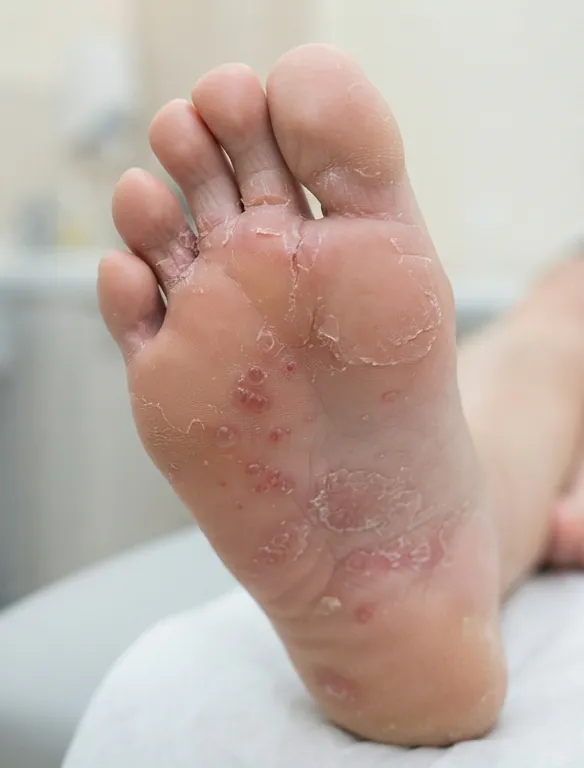
Chilblains vs Athlete's Foot
Chilblains are a reaction to cold. Red or purple swollen patches come up on the toes about a day after your feet got cold, and they clear on their own in one to three weeks. Athlete's foot is a fungal infection. It peels and splits the skin between the toes, it spreads slowly, and it does not clear without treatment.
What it is
Cold makes the tiny vessels in the toes narrow. When the skin warms up they open again too fast, fluid leaks into the tissue, and that swelling is the chilblain. Nothing is infected.
Dermatophytes feed on keratin in the top layer of skin. They arrive from damp floors, towels or shoes, and warm sweaty shoes let them settle in.
What it looks like
Puffy patches on the toes, sometimes darker in the middle. On deeper skin tones they can look brown or grey rather than red. Bad ones blister or break open.
Between the toes the skin turns white, soft and cracked. On the sole it can be fine dry scale that covers the heel and creeps up the sides.
What it feels like
Numb and prickly at first, then a deep burning itch as the foot warms up. Tender to press on.
Itch is the main feeling, worst between the toes and worst when the shoes come off.
Where on the foot
The exposed surfaces, usually several toes at once and usually both feet. Fingers, ears and the nose can get them too.
Most often the gap between the fourth and fifth toes. It spreads to the sole, the sides of the foot and the toenails.
When it turns up
Cold and damp weather sets it off, not freezing weather. It is a winter and early spring problem, and it settles in warm months.
More common in summer and after sport, because sweat and closed shoes are what it needs.
What it does over time
One to three weeks per episode. Repeated winters in the same toes can leave the skin slightly thickened or darker.
It will not clear on its own. Left alone it reaches the toenails, which are harder to treat, and it passes to other people.
What actually treats it
Warm socks, roomy shoes and gentle rewarming. A prescription steroid cream shortens a bad flare. For chilblains that return every winter, there are prescription tablets that widen the small vessels.
Terbinafine or clotrimazole from the drugstore, twice a day. Terbinafine clears more infections and does it in about a week, where clotrimazole takes around four.
When it needs a doctor
Also if they last longer than about three weeks, come with joint aches, or appear in someone who is not otherwise exposed to cold.
Or spreading redness up the foot, or toenails turning thick and yellow.
The season answers most of it
Chilblains are a cold-weather problem. They come up in damp cold, not deep freeze, and they mostly affect people in homes that are cool and a little damp. They fade as the weather warms.
Athlete's foot does the opposite. Sweat, heat and shoes that never dry out are what it needs, so it peaks in summer and after sport.
If you can point at the week your feet were cold and wet, and the rash arrived the next day, that is a chilblain.
Look at which surface of the toe is affected
Chilblains sit on the tops and tips of the toes: Those are the surfaces that get cold first, and they usually come up on several toes at once, on both feet.
Athlete's foot sits in the gaps between the toes: Those surfaces stay warm and damp, which is what the fungus needs, and one foot is often ahead of the other.
The two patterns barely overlap, which makes this one of the easier pairs to sort out at home.
Do not warm cold feet quickly
A hot bath, a radiator, or a hot water bottle against cold toes makes chilblains worse rather than better. Fast rewarming is what drives the fluid into the tissue in the first place.
Warm the whole body slowly instead. Put on socks, move around, and let the feet come up to temperature over half an hour.
Keeping the feet a steady temperature all day prevents more chilblains than treating each one does.
Chilblains that come back every year
Repeated chilblains are usually just how someone's circulation behaves in the cold, and better insulation is most of the answer. Wool socks, roomy shoes that do not squeeze the toes, and warming the whole house rather than one room.
Smoking narrows small blood vessels and makes chilblains more likely and slower to heal.
Mention it to a doctor if the pattern keeps repeating. Mention it too if chilblains appear when your feet have not been cold. Once in a while this points to a circulation or immune problem, and that is worth checking once.