Closed Comedones vs Milia
A closed comedone is a plugged pore. It is a soft, skin-coloured or whitish bump that comes and goes with the rest of your skin, and acne treatment clears it. Milia are keratin sealed inside a closed pocket. They are harder, whiter, and they sit in the same spot for months. Acne treatment does almost nothing to them. Soft and changeable means a comedone, hard and unchanging means a milium.
What it is
The pore still exists and still has an opening, but it is plugged and covered by a thin layer of skin. Normal skin bacteria feed on the trapped oil.
Keratin is the protein that makes up the surface of your skin. A small amount gets sealed into a closed pocket, and there is no opening at all.
What it looks like
Slightly raised, matt rather than shiny, and easiest to see in side lighting. In groups the skin looks bumpy and uneven rather than spotty.
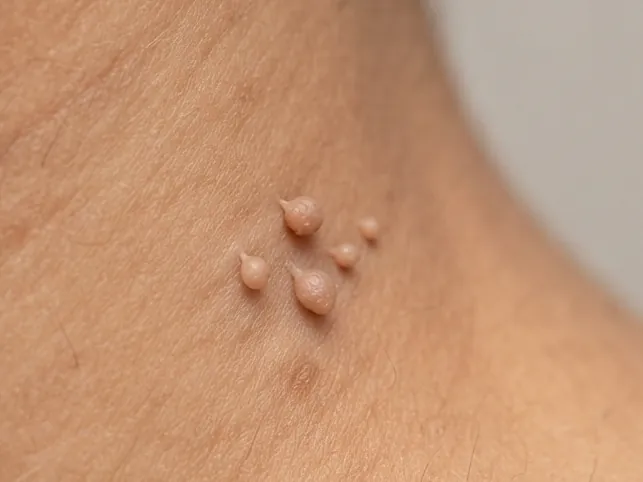
Round, dome-shaped, and clearly whiter than the skin around it. It looks like a grain of sand sitting just under the surface.
Size
Can swell into a red pimple if it becomes inflamed.
Pinhead-sized, and it stays exactly that size.
How it feels
Press it and it gives. The skin over it is thin, and the bump can be flattened for a moment.
Press it and there is a solid bead. Nothing comes out however hard you push, because it is sealed.
Where it shows up
The oily parts of the face. Also the chest, upper back and along a hairline where product builds up.
Eyelids and under the eyes most of all, then the nose and cheeks. Milia also appear on skin that was burned, blistered or scarred.
What it does over time
Numbers rise and fall with your routine, your hormones and the products you use. An individual comedone clears in days to weeks, or turns into a pimple.
It sits still for months. Some clear on their own eventually, and some do not.
What clears it
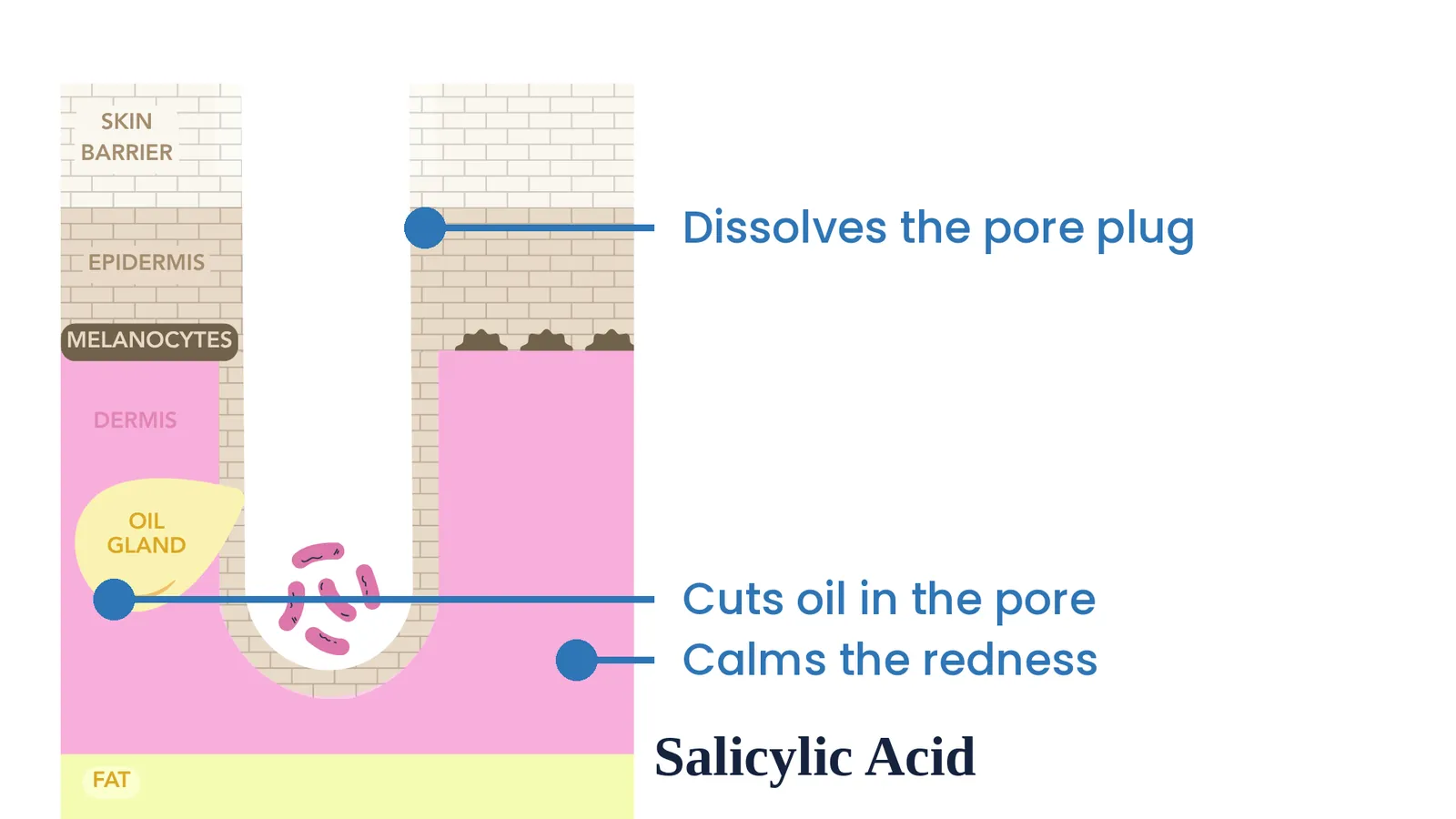
A retinoid such as adapalene or tretinoin is the main treatment. Salicylic acid helps too, because it dissolves oil inside the pore. Give either eight to twelve weeks.
A sterile needle opens the surface and the keratin lifts out. It takes seconds per bump. A retinoid can clear a crop slowly instead, over weeks to months.
When it needs a doctor
Persistent bumpy skin after three months of a retinoid is worth a prescription review. Comedones are harmless, so treatment is about how much they bother you.
Milia are harmless. Worth checking if a crop appears on skin that blistered or scarred, or if you cannot tell what you are looking at.
The one-minute test
Stretch the skin and look from the side: A closed comedone sits inside a pore, so the surface over it is the same colour as the rest of your face, just raised. A milium is a distinct white bead, and the white does not fade when you stretch the skin.
Then check the pattern: Comedones come in numbers across an oily zone — twenty across a forehead is normal. Milia come in ones and twos, and usually near the eyes.
Why acne products do not touch milia
Acne products work on pores: A retinoid speeds up shedding so the pore stops plugging. Salicylic acid gets into the oil and loosens the plug. Both need an opening to work through.
A milium has no opening: Nothing can get in and nothing can get out. A retinoid still helps a little, by thinning the surface layer over the top so the keratin works its way out, but it is slow and it is not what the product was built for.
Do not pick either one
Picking a comedone turns a small bump into a mark: Squeezing pushes the plug deeper and inflames the pore. That is what turns a three-day bump into a three-month brown mark.
Picking a milium does nothing at all: There is nothing to squeeze out of. The pressure bruises the thin skin over the top, and on an eyelid that leaves a mark or a small dent.
What actually causes each one
Comedones come from oil, shedding and what you put on your face: Heavy creams, thick sunscreens, hair products along the hairline, and hormonal shifts all feed them. Changing one product can visibly change the count in six weeks.
Milia come from skin that is not shedding cleanly: In newborns they are simply immature glands, and they clear by themselves. In adults they follow damage to the surface: sunburn, blistering, a healed rash, or long-term use of a strong steroid cream on thin skin.