Comparison

Cyst vs Lipoma

A cyst is a firm keratin sac in the skin, often with a tiny dark dot. A lipoma is soft fat underneath. Neither is dangerous — and when a lump is worth checking.
Written & medically reviewed by the Dermapedia team
At a Glance

Both are soft lumps that sit under the skin for years without doing much. Neither is dangerous. The difference is what is inside and how deep it sits.

A cyst is in the skin. A sac attached to the skin, slowly filling with keratin — the protein your skin and nails are made of. Because it is attached, the skin moves with it, and there is often a tiny dark dot on the surface.

A lipoma is under the skin. A soft ball of fat sitting below, in its own thin capsule. The skin slides freely over the top, and there is no dot.

Neither needs removing unless it bothers you, is in the way, or is changing.

Epidermoid Cyst
Keratin sac
Lipoma
Fatty lump
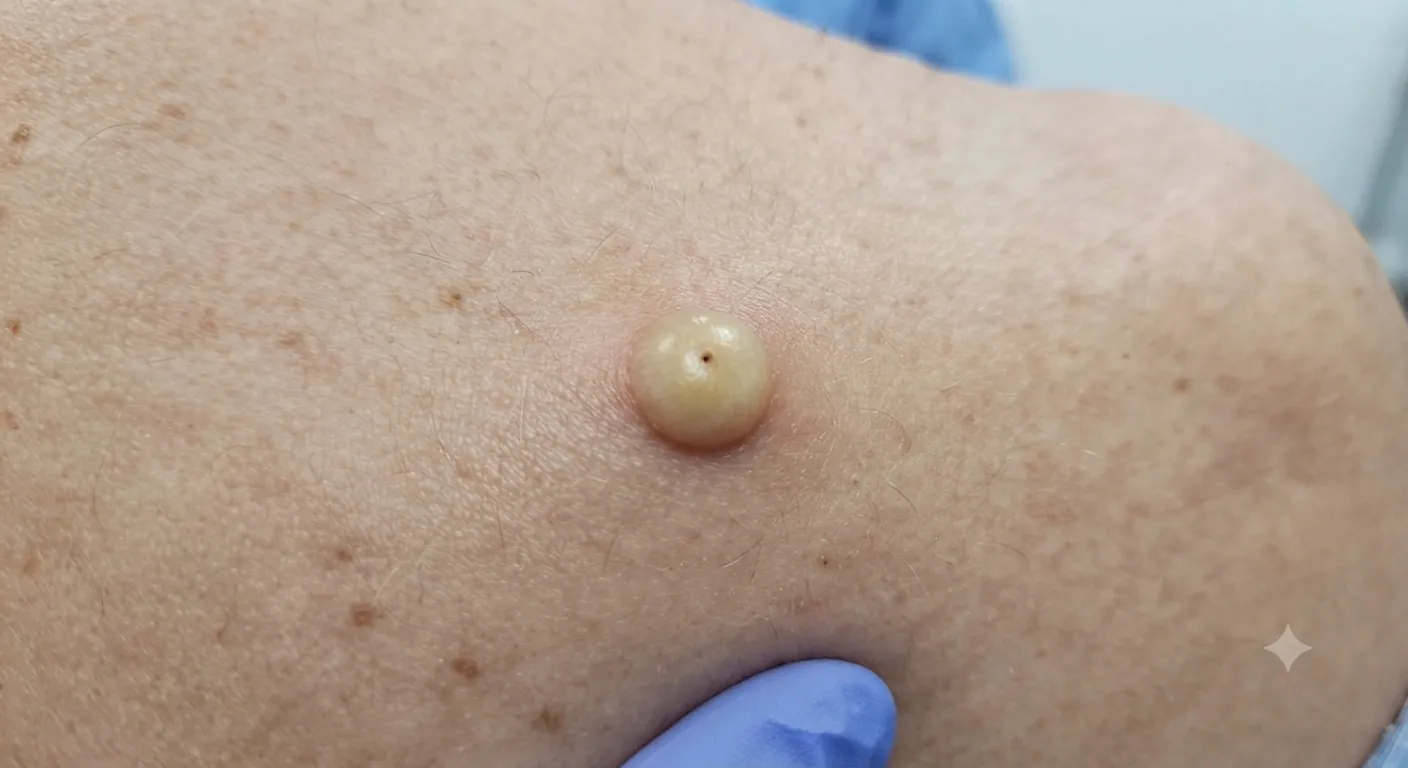
The tiny dark opening in the centre is the punctum — the follicle the sac originally grew from. It is the single most useful feature on this page, and it is easy to miss unless you look closely in good light. Note also how defined the edges are: a cyst feels like a marble under the skin.
A lipoma sits under the skin rather than in it, so the surface stays completely normal — no dot, no colour change, no defined border. The skin slides freely over the top, which is the quickest way to tell it from a cyst without touching anything else.

What is inside

Keratin

The same protein as skin and nails, packed into a closed sac that grew from a hair follicle.

Fat

Ordinary fat cells in a thin capsule. It is a benign growth, not a blockage.

How it feels

Firm, like a marble

Defined edges. It rolls under your finger.

Soft and doughy

It gives when you press it, and the edges are vaguer.

Both
Firm versus squishy is the quickest test, and it is right most of the time.

Does the skin move over it

No — it moves with the lump

The sac is attached to the skin.

Yes — freely

The lump sits below, so the skin glides over the top.

The surface

Often a tiny dark dot

A small opening in the centre, called a punctum. That is the old follicle, and it is close to a giveaway.

Nothing

Normal skin, no opening.

Where it turns up

Face, neck, upper back, behind the ears, scalp
Shoulders, back, arms, neck, thighs

Anywhere with a layer of fat.

Size and growth

Millimetres to a few centimetres

Slow. Can flare and shrink if it ruptures.

Usually a few centimetres

Very slow, often stable for years.

Does it hurt

Only if it ruptures

Then it becomes red, hot and painful within a day or two.

Usually not

A rare type called an angiolipoma is tender.

Can it get infected or inflamed

Yes

A ruptured cyst leaks keratin into the surrounding tissue and the body reacts. It looks exactly like an infection and is often not one.

No

There is nothing to rupture or block.

How it is removed

The whole sac, in one piece.

Local anaesthetic, done when it is calm rather than inflamed. Leaving any of the sac behind means it refills.

The lump and its capsule.

Local anaesthetic. Straightforward, and recurrence is uncommon.
Both
Neither needs removing for medical reasons in most cases. It is a comfort and cosmetic decision.
Close-up of a firm, pale yellow, dome-shaped lump on skin, with a small dark pinpoint opening at its centre, examined by gloved hands.
The tiny dark opening in the centre is the punctum — the follicle the sac originally grew from. It is the single most useful feature on this page, and it is easy to miss unless you look closely in good light. Note also how defined the edges are: a cyst feels like a marble under the skin.
A smooth, skin-coloured, dome-shaped swelling on a shoulder, with normal unbroken skin over it and no central opening.
A lipoma sits under the skin rather than in it, so the surface stays completely normal — no dot, no colour change, no defined border. The skin slides freely over the top, which is the quickest way to tell it from a cyst without touching anything else.

What would make either one worth checking

Most lumps under the skin are one of these two and nothing more. A small number are not, and these are the features that warrant an appointment rather than a wait:

  • Growing quickly — over weeks rather than years
  • Hard rather than soft, or fixed in place so it will not move at all
  • Larger than about five centimetres
  • Painful on its own, without having flared or been knocked
  • Deep, feeling like it sits below the muscle rather than just under the skin
  • Skin changes over it — dimpling, colour change, or an ulcer

None of those means something serious. They are the reasons to have it examined rather than assume.

Do not squeeze a cyst

Pressing on it can rupture the sac under the skin and turn a lump you had happily ignored for five years into a red, painful one that now needs urgent attention. And it does not solve anything, because the sac stays and refills.

There is nothing to squeeze on a lipoma at all.

See a dermatologist if

  • The lump is growing noticeably faster than it used to
  • It has become hard, fixed, or painful
  • A long-standing lump suddenly turns red, hot and sore
  • It is catching on clothing, a razor, or a bra strap
  • You simply want it gone — that is a perfectly good reason, and both are minor procedures
Questions people ask+
Lipoma vs cyst — what is the difference?A lipoma is a soft ball of fat sitting under the skin, so the skin slides freely over the top and there is no surface dot. A cyst is attached to the skin and filled with keratin, so the skin moves with it and there is often a tiny dark dot on top. Neither is dangerous.
How can I tell which one I have?Press it. Firm and defined with skin that moves with it points to a cyst. Soft, doughy, with skin gliding over the top points to a lipoma.
Are either of them dangerous?No. Both are benign, and neither needs removing for medical reasons in most cases.
Should I get it removed?Only if it bothers you, catches on clothing or a razor, or is changing. Wanting it gone is a perfectly good reason, and both are minor procedures under local anaesthetic.
When should I worry about a lump under my skin?If it grows over weeks rather than years, becomes hard or fixed in place, gets larger than about five centimetres, hurts on its own, feels like it sits below the muscle, or the skin over it dimples or changes colour. None of those means something serious — they are reasons to have it examined.
Why did my cyst suddenly become red and painful?It probably ruptured under the skin. The keratin leaks into surrounding tissue and your body reacts, which looks exactly like an infection and often is not one. It still needs seeing, and the sac will need removing once it settles.
Can I squeeze a cyst out?No. Squeezing can rupture the sac and turn a painless lump into an inflamed one, and it does not fix anything — the sac stays behind and refills.
Will a lipoma turn into cancer?No. A lipoma is benign and does not become cancerous. A rare fatty tumour called a liposarcoma can look similar, which is why fast growth, hardness, or a deep lump larger than five centimetres is worth checking.