Cystic Acne vs Fungal Acne
Cystic acne is the deepest form of true acne. Large, painful lumps sit under the skin for weeks and often leave scars. Fungal acne is not acne at all — it is yeast growing inside the hair follicles, so the bumps are tiny, all the same size, and itchy. Size and pain separate them in seconds: cystic acne hurts and is big, fungal acne itches and is small.
What it is
A pore blocks, and the inflammation goes down instead of out. The wall of the pore breaks under the surface, and the surrounding skin becomes inflamed.
Malassezia yeast lives on normal skin. When it multiplies inside the follicle, the follicle becomes inflamed. It is not caught from anyone.
What it looks like
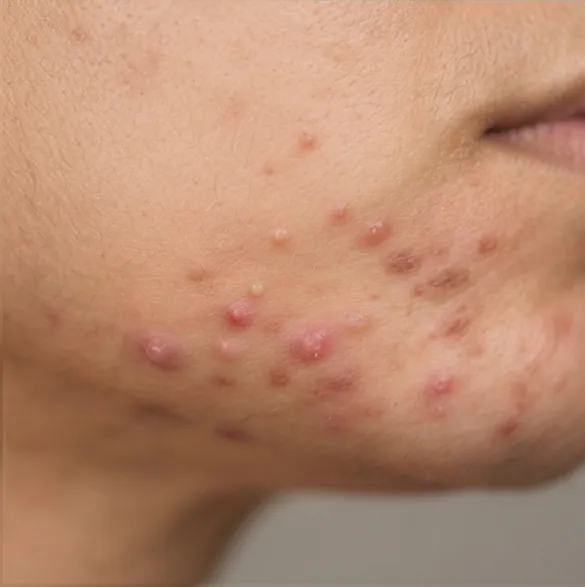
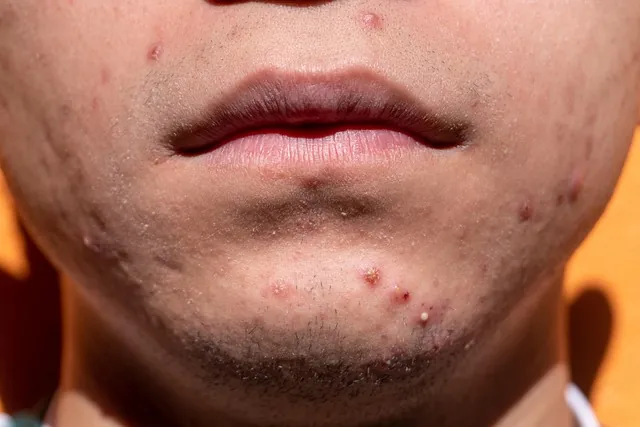
Firm, red or skin-coloured swellings, often the size of a pea or bigger. They never come to a white point.
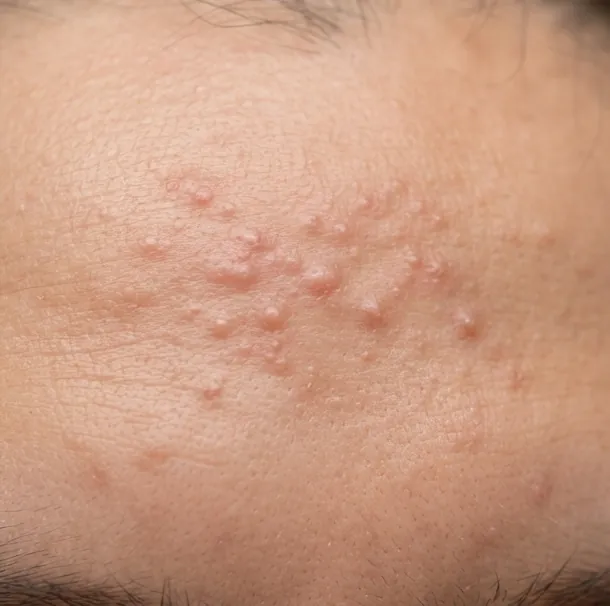
Tiny red or skin-coloured bumps in tight clusters, with no blackheads mixed in. The sameness is the giveaway.
Does it hurt or itch
It throbs on its own, not just when pressed. Lying on that side of your face is uncomfortable.
Most people say the bumps itch, and that sweating makes the itch worse. Pain is unusual.
Where it shows up
It follows the oiliest skin and often runs alongside ordinary spots on the same face.
It follows sweat and trapped heat. Damp gym clothes and humid weather are the usual setting.
How long one lasts
A single lump can stay for six weeks. It fades slowly and often leaves a dark mark or a dent.
The bumps respond quickly to an antifungal, then return if treatment stops entirely.
What clears it
Oral antibiotics, spironolactone, or isotretinoin for widespread scarring acne. A single stubborn lump can be settled with a small steroid injection, often within a day or two.
Ketoconazole shampoo used on the skin as a wash, left on a few minutes before rinsing. Stubborn cases need an oral antifungal for a few weeks.
What it does over time
This is the type that leaves permanent dents. Treating early is a scar-prevention decision, not a cosmetic one.
It does not usually damage the skin. It does return, so many people keep using an antifungal wash once or twice a week.
Why acne treatment does nothing for fungal acne
Acne products target oil, dead skin and bacteria: Fungal acne is a yeast, so benzoyl peroxide, salicylic acid and retinoids have nothing to act on. The bumps sit there unchanged.
Oral antibiotics can make fungal acne worse: They reduce the normal skin bacteria that hold the yeast in check. If bumps appear or spread after starting an antibiotic for acne, fungal acne is worth considering.
The reverse is also true: Antifungal shampoo will do nothing for a deep, painful lump on the jaw. Neither treatment is a reasonable guess for the other condition.
How to tell them apart at home
Measure the bumps by eye: Cystic lumps are pea-sized or larger and stand out one at a time. Fungal bumps are one or two millimetres and come in crowds.
Ask whether it hurts or itches: Deep throbbing pain when you are not touching it means cystic acne. Itch that gets worse with sweat means fungal acne.
Look for blackheads nearby: Cystic acne almost always sits alongside ordinary blackheads and whiteheads. Fungal acne comes without them.
The one that cannot wait
Cystic acne is a scarring condition: Every week a deep lump stays inflamed is a week the skin underneath is being damaged. The dents left behind are difficult and expensive to treat later.
Nothing you buy over the counter reaches it: Over-the-counter products work at the surface. Cystic lumps sit millimetres down, which is why people feel a whole shelf of products has failed them.
Prescription treatment usually works: Most cases settle on the right prescription, and a dermatologist can also inject a single stubborn lump for fast relief before an event.
Getting the diagnosis right
A dermatologist can confirm fungal acne in one visit: A gentle skin scraping looked at under a microscope shows the yeast. It is a same-day answer.
Say what has already failed: Months of acne treatment with no change is itself a clue, and it is the sentence that most often redirects the diagnosis.
Mention itch specifically: Acne rarely itches. Reporting itch changes what a clinician looks for.