Stress Acne vs Hormonal Acne
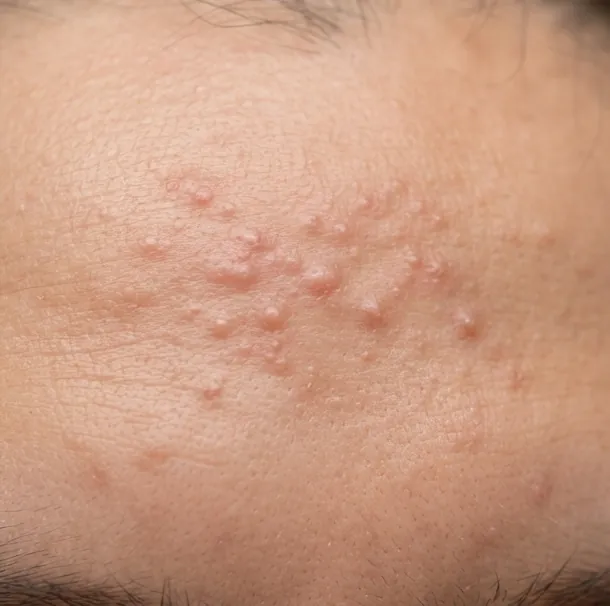
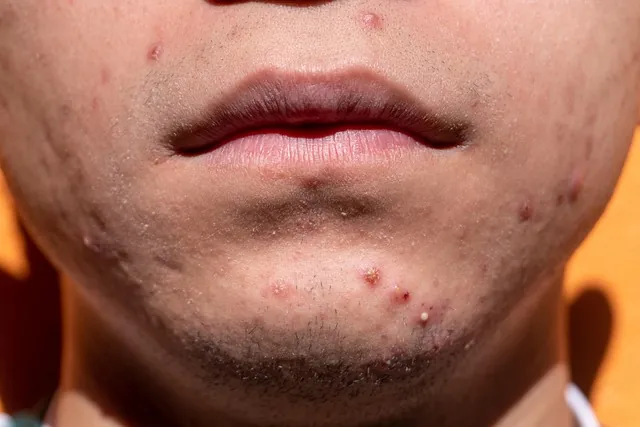
Stress acne is a flare that follows a hard stretch. It turns up days after the pressure starts, spreads across the forehead, nose and cheeks, and calms down when life does. Hormonal acne runs on a cycle rather than on events. It sits low on the face — jaw, chin and neck — and returns at roughly the same point each month. Both are true acne, and both are driven by hormones, so the useful difference is timing and location.
What it is
Stress raises cortisol. Cortisol nudges the oil glands to make more oil and weakens the skin barrier. Pores that were coping stop coping.
Androgens tell the oil glands to work harder. Oil and dead skin plug the pore, and the plugged pore becomes inflamed.
What it looks like
Whiteheads, small red bumps, and the odd deeper one. It often arrives as a wave rather than one spot at a time.
Firm, tender lumps under the skin that never come to a head, mixed with smaller spots.
Where it shows up
The oiliest zones react first. It can reach the jaw too, which is part of why the two get confused.
The lower-face pattern is the most reliable single clue. Some people also break out on the chest and back.
What sets it off
Deadlines, exams, poor sleep, illness, grief, a house move. Touching your face more, and skipping your routine, add to it.
The days before a period, starting or stopping the pill, and conditions such as polycystic ovary syndrome.
Timing
Spots usually show up several days behind the trigger, which is why the link is easy to miss.
A predictable rhythm is the strongest evidence that hormones are driving it.
What helps
Sleep and stress load are genuinely part of the treatment here. Keep the skincare simple: salicylic acid or benzoyl peroxide on the spots, and do not scrub.
Topical retinoids first. If the deep lumps keep coming, a doctor may add spironolactone or a combined pill, which work on the hormone signal itself.
What it does over time
It tends to fade over a few weeks once things calm down, unless picking turns it into marks.
Deep lumps left alone for weeks are the ones that leave dents and dark marks.
They overlap more than the names suggest
Stress acne is hormonal acne: Cortisol is a hormone, and it acts on the same oil glands. The two labels describe different triggers for one process, not two separate diseases.
That is why the treatments overlap too: A retinoid helps both. Benzoyl peroxide helps both. Nothing you buy is labelled for one and useless for the other.
The reason to tell them apart is what you change: With a stress flare, the useful lever is sleep, workload and not picking. With a cyclical pattern, the useful lever is a prescription that works on hormones.
How to work out which one you have
Look at the calendar first: Mark the days you break out for two or three months. A pattern that lines up with your cycle points to hormonal acne. A pattern that lines up with hard weeks points to stress.
Then look at the map: Spots low on the face, especially firm ones along the jaw, lean hormonal. Spots across the forehead and nose lean stress.
Then look at the depth: Deep tender lumps that last two weeks are the hormonal signature. A crop of shallower spots that clears in a week is more typical of a stress flare.
What does not help either one
Scrubbing and stripping: Harsh cleansing makes both worse. Stripped skin makes more oil, not less, and a damaged barrier turns small spots red.
Piling on new products: A flare tempts people into three new actives at once. That usually adds irritation on top of the acne and makes it harder to tell what worked.
Waiting out deep lumps: A tender lump that lasts weeks is the type that scars. That is worth an appointment rather than patience.
Before you book
Track your breakouts against dates for at least two cycles
Note whether spots are shallow or deep and tender
Bring a list of everything you are putting on your skin
Mention irregular periods, unusual hair growth or hair thinning — these change the plan
Say out loud how long you have been treating it, and with what