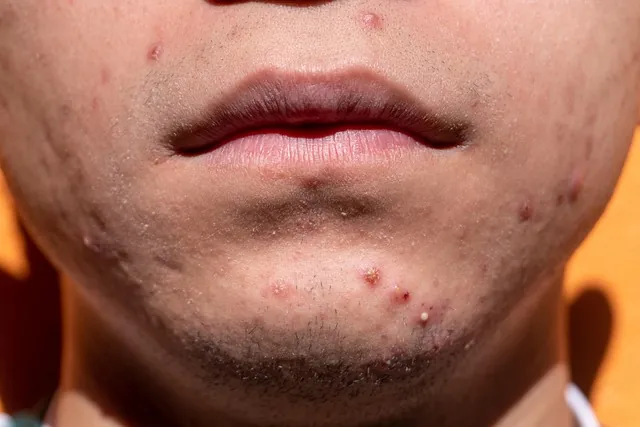
Fungal Acne vs Hormonal Acne
Fungal acne is not acne at all. It is a yeast that lives on everyone's skin, growing too fast inside the hair follicles. Hormonal acne is true acne, driven by oil, blocked pores and shifting hormones. The fastest way to tell them apart is itch and pattern: fungal bumps itch and are all the same size, while hormonal spots vary in size and gather on the jaw and chin.
What it is
Malassezia yeast lives on normal skin. When it multiplies inside the follicle, the follicle becomes inflamed. It is not caught from anyone and it is not dirt.
Androgens tell the oil glands to make more oil. Oil and dead skin plug the pore. Skin bacteria multiply in the trapped oil, and the spot turns red.
What it looks like
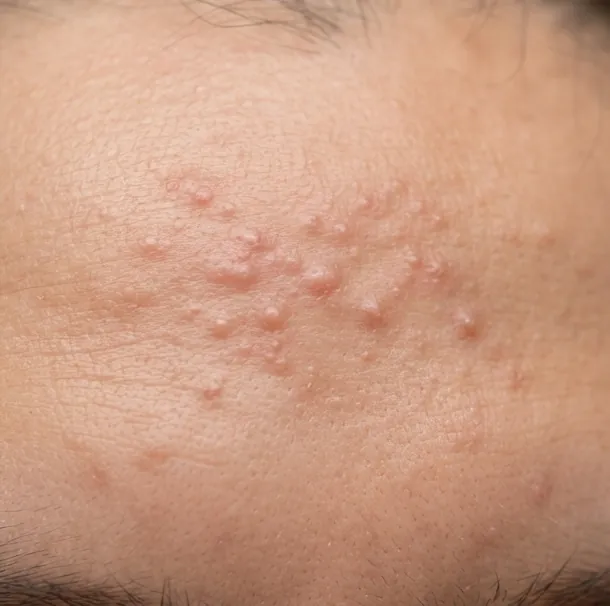
Tiny red or skin-coloured bumps, often in tight clusters. No blackheads. That sameness is the giveaway — the bumps look copied and pasted.
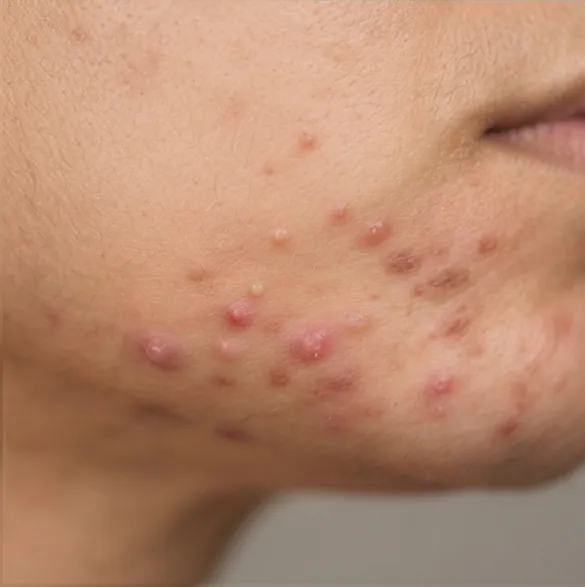
Blackheads, whiteheads, red bumps and deep tender lumps, all on the same face at the same time.
Does it itch
Itch is the single most useful clue. Most people with fungal acne say the bumps itch, and that it is worse after sweating.
Deep spots are sore rather than itchy.
Where it shows up
Also the forehead and hairline. It follows sweat and trapped heat, not oil.
It can appear on the chest and back too, but the lower face is the pattern people recognise.
What sets it off
Humid weather, sitting in damp gym clothes, heavy oily products, and courses of oral antibiotics.
The week before a period, starting or stopping the pill, and conditions such as polycystic ovary syndrome.
What clears it
Ketoconazole shampoo used on the skin as a wash, left on a few minutes before rinsing. Stubborn cases need an oral antifungal for a few weeks.
Topical retinoids and benzoyl peroxide. For deeper spots, a doctor may add spironolactone or a combined pill.
What it does over time
It rarely scars. It does return, so many people keep an antifungal wash in the shower and use it once or twice a week.
Deep lumps left alone for weeks leave dents and dark marks. This is the reason not to wait it out.
Why acne treatments do not clear fungal acne
Acne products are built to attack oil, dead skin and bacteria: Fungal acne is none of those. Benzoyl peroxide, salicylic acid and retinoids have nothing to work on, so the bumps sit there unchanged.
Oral antibiotics can make it worse: They cut back the normal skin bacteria that keep the yeast in check, which gives the yeast more room. If new bumps appear while you are taking an antibiotic for acne, fungal acne is the first thing to think about.
This is the most common reason people arrive at a dermatologist frustrated: Months of correct acne treatment with no change, then a two-week antifungal wash that finally works.
How to tell them apart in the mirror
Start with the bumps themselves: Line up ten of them. If they are all the same small size with no blackheads mixed in, that points to fungal acne. If some are blackheads, some are whiteheads and some are deep lumps, that is ordinary acne.
Then look at the map: Fungal acne clusters on the chest, back, shoulders and hairline. Hormonal acne clusters low on the face.
Then ask about itch: An itchy breakout is unusual for acne and common for fungal acne. It is not proof on its own, but with the other two clues it is close.
You can have both at once
Many people do: Fungal acne often appears in someone who already has acne, which is exactly why it gets missed. The face keeps behaving like acne while the chest and back do not.
Treating one does not treat the other: If your face improves on acne treatment but your chest and shoulders stay bumpy and itchy, that is a strong sign two different things are going on.
A dermatologist can confirm it quickly: A gentle scraping looked at under a microscope shows the yeast. It is a same-visit answer, and it saves months of guessing.
What to change while you treat it
Shower and change out of damp clothing soon after exercise
Wash gym gear and pillowcases regularly
Give heavy oils and rich balms a break on the chest and back
Finish the full course of any antifungal, even once the bumps fade
Expect a maintenance routine rather than a one-time cure