Ferulic Acid vs Hyaluronic Acid
Ferulic acid is an antioxidant you wear in the morning. It mops up the damage sunlight and pollution do to skin, and it is almost always sold inside a vitamin C serum, which it keeps from going off. Hyaluronic acid holds water in the skin. One protects and the other hydrates, so they are not alternatives and most routines end up with both.
What it does
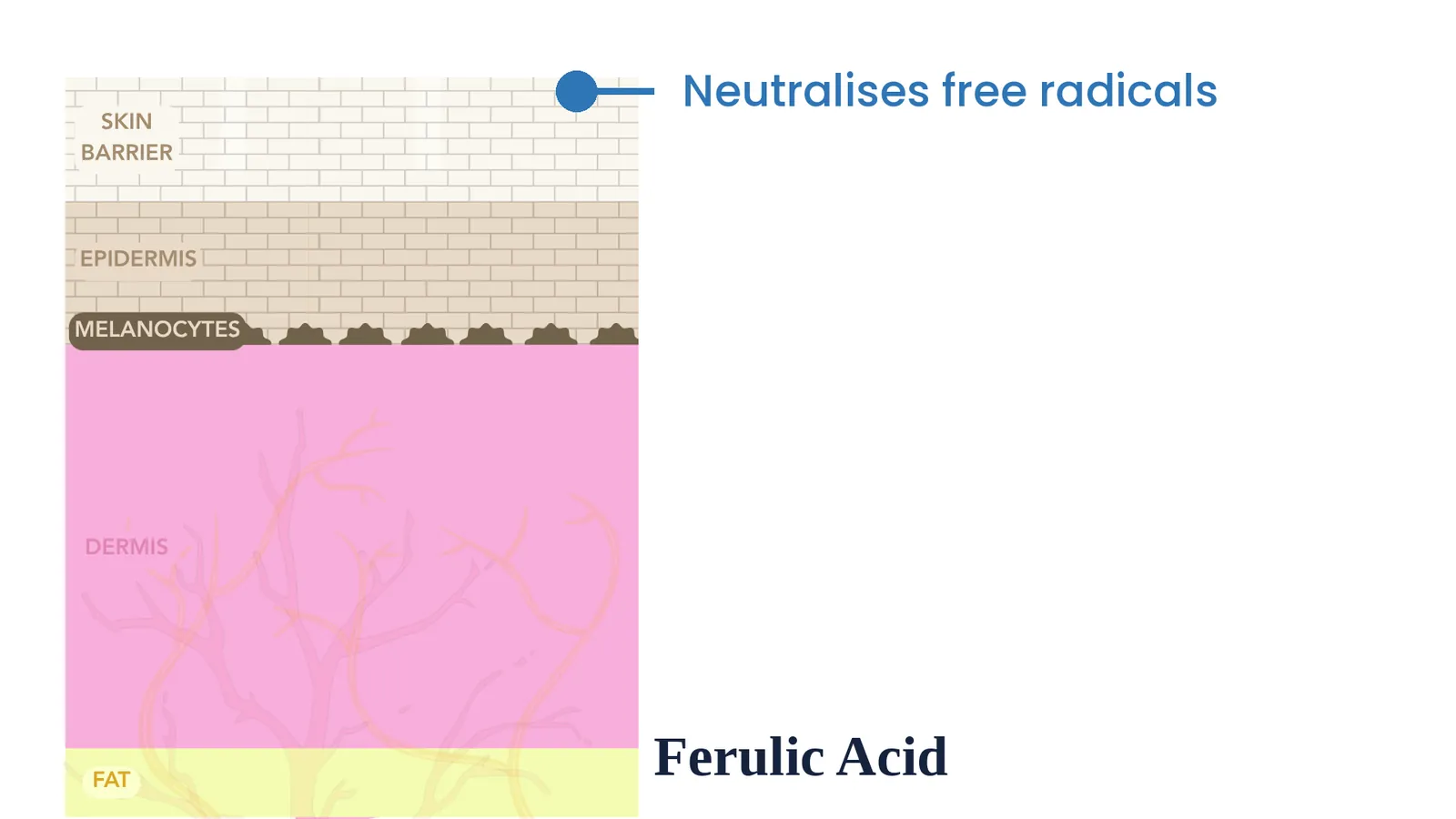
It neutralises free radicals, the unstable molecules that sunlight and pollution create in skin. It also stops vitamin C breaking down in the bottle.
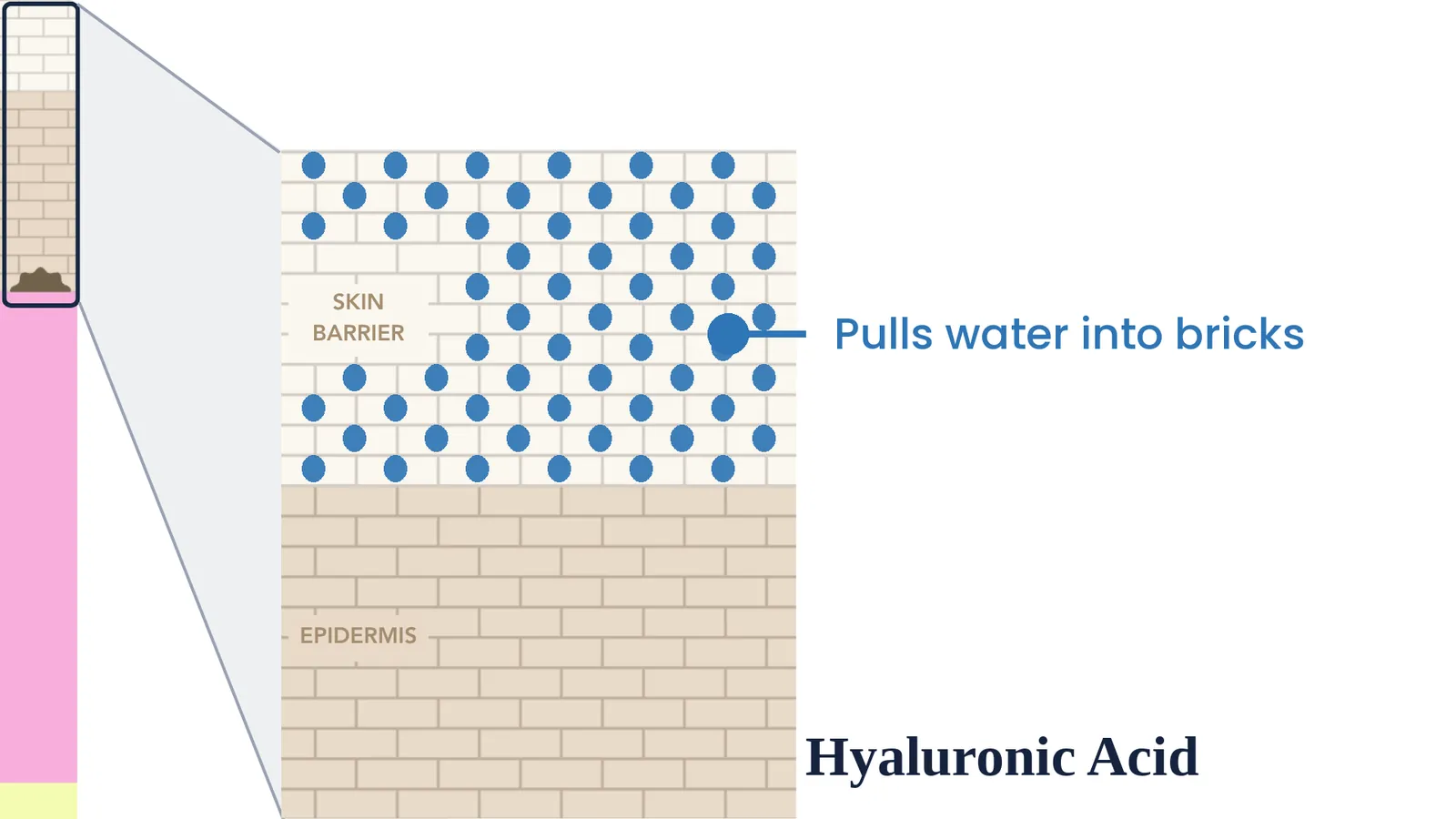
It is a humectant, meaning it binds water and keeps it in the outer layers of skin.
What it is best at
It works best on damage that has not happened yet. It is a morning ingredient, worn under sunscreen.
Skin that feels papery and looks flat. The change shows up within minutes.
What it will not do
Ferulic acid has no moisturizing effect. On its own the serum can feel drying.
Hyaluronic acid does nothing about sun damage, pigment or free radicals. It holds water.
How long until you see a change
Prevention is invisible by nature. Over years the point is what did not appear.
Hydration is immediate, and it is short-lived, which is why it is reapplied daily.
Why it is rarely sold alone
Vitamin C degrades quickly. Adding ferulic acid and vitamin E holds it together, and in lab testing that trio protected skin from sun damage far better than vitamin C alone.
It is the most common single-ingredient serum on the shelf, and it also appears inside almost every moisturizer.
What it feels like
Vitamin C serums with ferulic acid often smell faintly of hot dogs as they age. That smell means the vitamin C is oxidising.
It disappears in seconds under a moisturizer.
The downside
The serum turns yellow, then brown. Once it is dark it has lost most of its power, whatever the date on the box says.
One of the best-tolerated ingredients in skincare. In very dry air it can pull water out of the skin rather than in, so a moisturizer over it matters.
Cost
Ferulic acid itself is cheap. The formulas it comes in are among the more expensive things in a routine.
It is already in a large share of drugstore moisturizers and serums.
The at-home or drugstore version
The ingredient is the same at any price. What you are paying for is a formula that stays stable and opaque packaging that keeps light out.
The serum on the shelf is the same molecule a clinic uses. The injected version is a filler placed under the skin to add volume, which no serum can do.
Who each suits
They are not a comparison at all
Ferulic acid is a shield: It sits in the skin and takes the hit from free radicals so your own cells do not. That is protection, and protection has no visible payoff on any given day.
Hyaluronic acid is a sponge: It binds water and holds it near the surface, and the result is visible within minutes.
So the only real question is whether you need both: Most people do, because dehydration and sun damage are separate problems with separate answers.
Ferulic acid mostly comes attached to vitamin C
You will rarely find it on its own: It is a stabiliser as much as an active. Vitamin C is famously unstable, and ferulic acid and vitamin E together keep it working for longer.
That trio is the reason those serums exist: The combination protects skin from sunlight better than vitamin C on its own, which is why it has been copied so widely.
It does not replace sunscreen: An antioxidant serum handles the damage sunscreen lets through. It does not block light, and it is not a substitute for a morning SPF.
Using them together
Both go on in the morning, thinnest first: Antioxidant serum on clean skin, hyaluronic acid next, then moisturizer, then sunscreen.
Some people find the pairing more comfortable than vitamin C alone: Vitamin C serums can be drying, and a humectant underneath takes the edge off.
There is no conflict and no gap to leave: The old rules about waiting between layers do not apply here.
Which one your skin actually needs
Choose ferulic acid, in a vitamin C serum, if you want to slow visible ageing: It is a long game, and it is the closest thing to a preventive step in skincare after sunscreen.
Choose hyaluronic acid if your skin looks dull and feels tight: That is dehydration, and it responds within days.
Neither treats a skin condition: Acne, rosacea, melasma and deep lines all need something else.
Before you buy
Buy antioxidant serums in opaque bottles with a pump, not a dropper jar
Throw out a vitamin C serum once it has turned brown
Store it away from the shower and the windowsill
Apply hyaluronic acid to damp skin and always seal it with a moisturizer
Keep sunscreen in the routine, since the antioxidant works underneath it rather than instead of it