Glycolic Acid vs Kojic Acid
Glycolic acid lifts dead, pigmented cells off the surface of the skin. It fades marks and smooths rough texture at the same time, so it does more than one job. Kojic acid blocks your skin from making new pigment. It is a spot-fader and very little else, which makes it the more direct tool when dark marks are your only complaint.
What you do
A toner, serum or pad left on at night. Some people have a stronger peel in a clinic every few weeks instead.
A serum, cream or cleansing bar. Serums are left on; bars get rinsed away, so they do less.
What you will see
Softer texture, less dullness, smaller-looking pores, and a slow fade of surface discolouration.
Sun spots, melasma patches and marks left by old acne gradually stop standing out from the skin around them.
What it will not do
Glycolic acid removes what is already on the surface. It does nothing to slow the cells that are making more.
Kojic acid does not exfoliate, so rough, bumpy or dull skin needs something else alongside it.
How long until it works
Brightness comes early. Discolouration takes a few months of steady use.
Fading is gradual throughout. Anything faster usually means the mark was very superficial.
How long it lasts
Turnover returns to its usual pace within a few weeks of stopping.
Spots return if the trigger — sun, inflammation or hormonal change — is still there.
The downside
It can sting on application and it makes skin more sensitive to sun. Daily sunscreen is not optional with an AHA.
It can sting and cause a rash in some people, more so with long use. It also oxidises easily, so the product itself darkens and loses strength.
Cost
Drugstore serums, toners and pads are cheap. A course of in-clinic peels costs considerably more.
Sold in drugstore serums, creams and soaps. There is no premium version that works differently.
The at-home or drugstore version
Drugstore glycolic acid works at the surface and works slowly. A clinic peel is the same molecule, stronger and buffered differently, so it reaches deeper and works faster — with a few days of flaking as the trade.
Kojic acid is an over-the-counter ingredient with no prescription form. A clinician treating stubborn pigment reaches for hydroquinone or tranexamic acid instead.
They work at opposite ends of the same problem
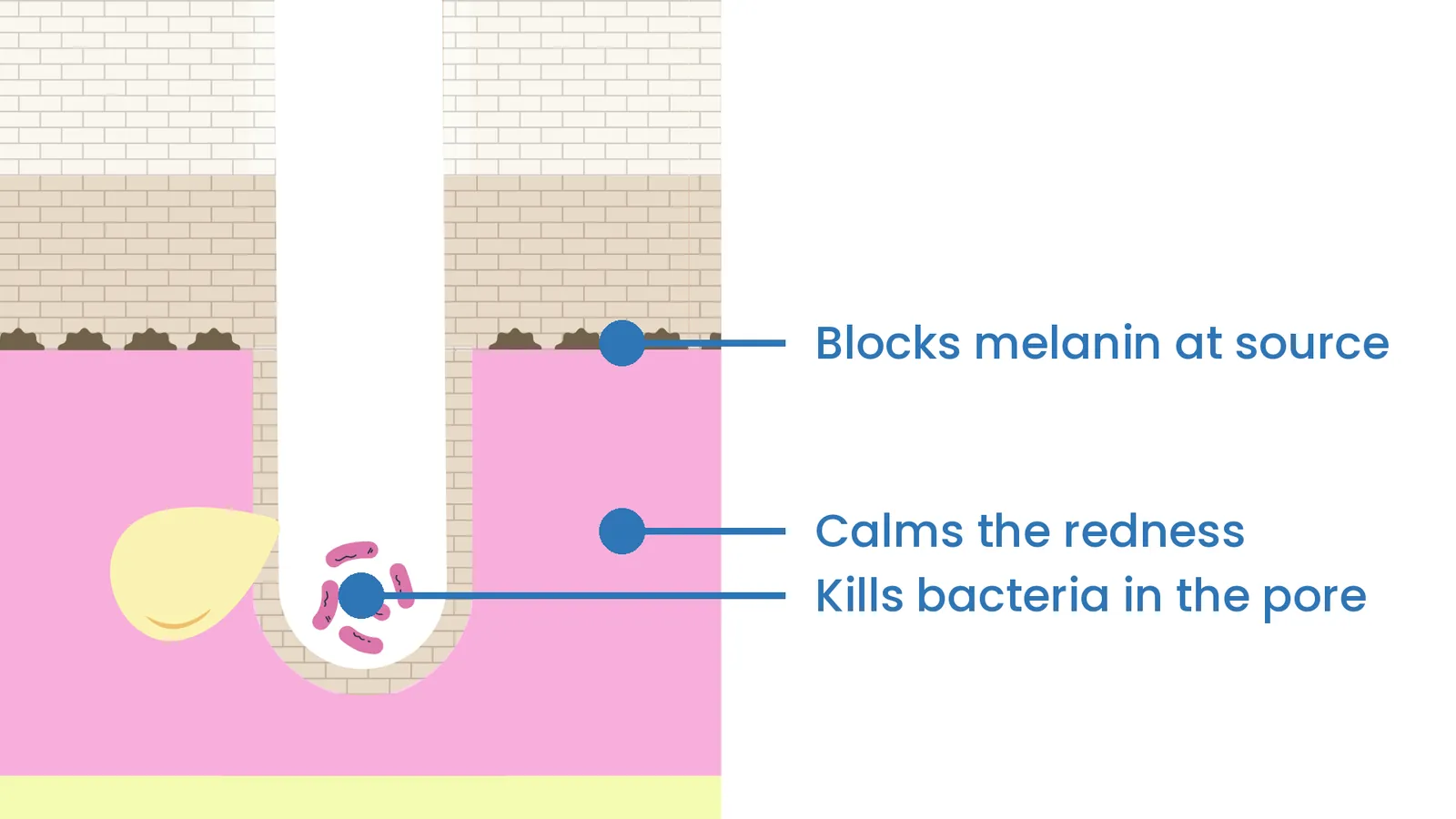
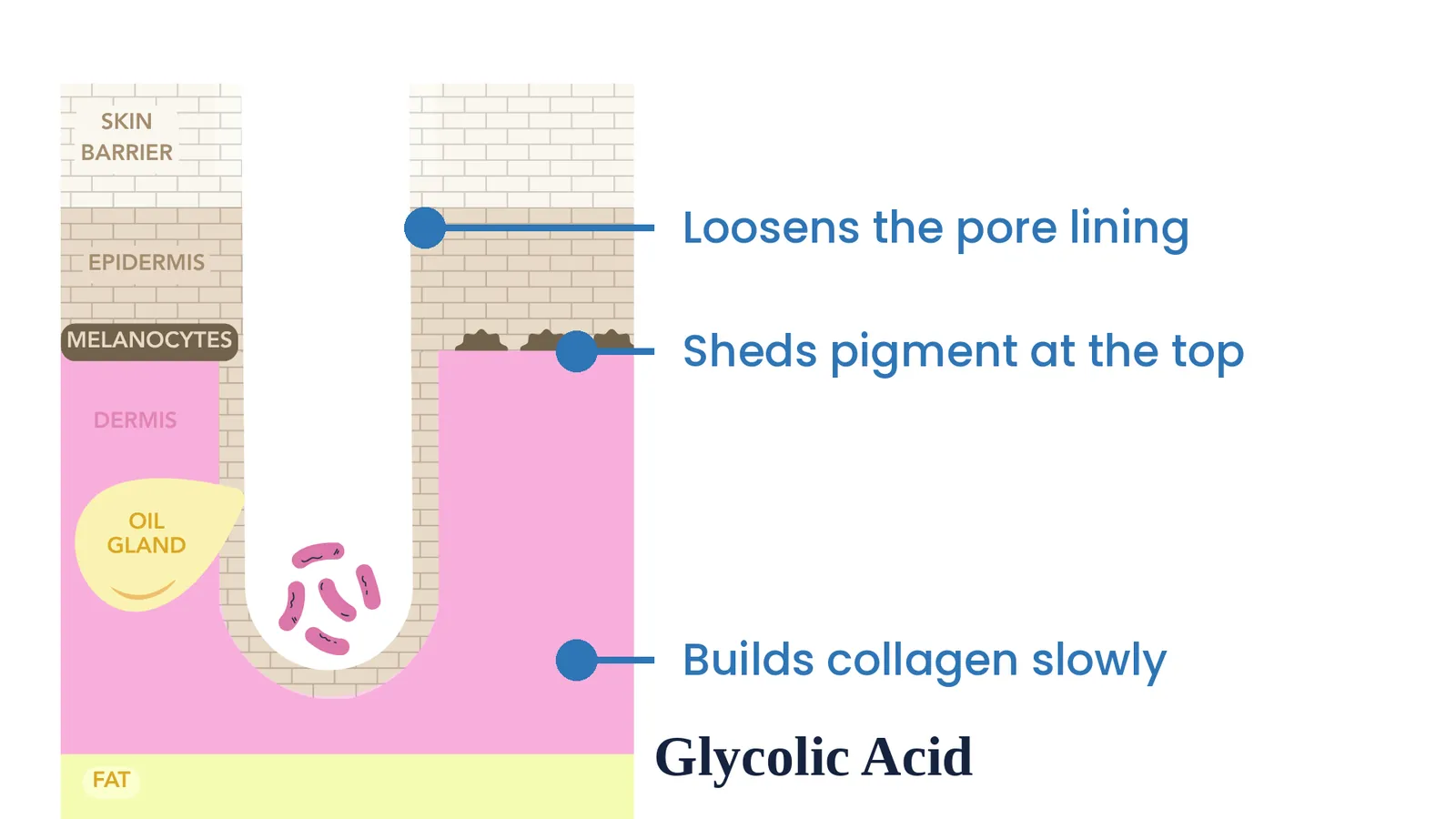
Glycolic acid removes pigment that has already been made: It loosens the bonds holding dead surface cells together, and those cells take their pigment with them when they go.
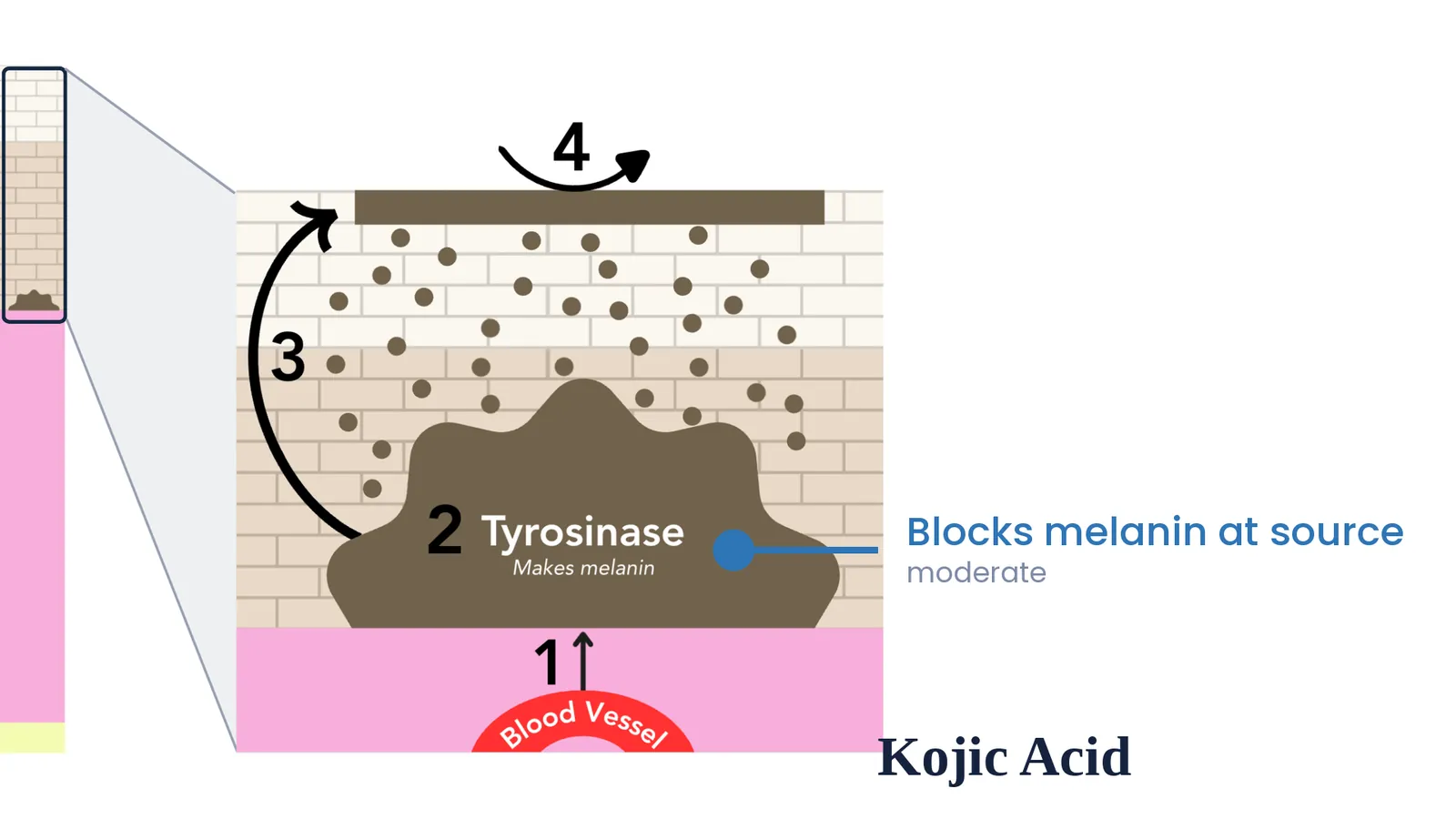
Kojic acid stops pigment being made in the first place: Tyrosinase, the enzyme that builds melanin, needs copper to work. Kojic acid grabs that copper and the production line slows down.
So one clears the backlog and the other closes the tap: That is why they are often used together rather than chosen between.
Which one for which complaint
Choose glycolic acid if your skin is dull, rough or uneven overall: Bumpy texture, blackheads, a general lack of glow and mild surface discolouration are its territory.
Choose kojic acid if defined dark spots are the whole problem: Sun spots, melasma and old acne marks on skin that is not especially reactive respond to it, and it does not thin the surface.
Choose glycolic acid if you also want the anti-ageing effect: Regular AHA use softens fine lines a little. Kojic acid does nothing for lines at all.
Using them together
Layering both at once is the usual mistake: An exfoliating acid opens the door for the brightener, which sounds efficient and mostly produces a stinging, red face.
Alternating nights is the workable version: Glycolic acid two or three nights a week, kojic acid on the nights in between, is a routine most skin tolerates.
Deeper skin tones need more care with the acid than the brightener: Irritation itself can trigger extra pigment, so a strong glycolic peel on deeper skin is a decision for a clinician rather than a shopping cart.
Before you start either one
Introduce one new ingredient at a time and give it eight weeks
Start two or three nights a week rather than daily
Wear sunscreen every morning — mandatory with glycolic acid, sensible with both
Keep kojic acid products sealed and out of the light, and replace them once they darken
Take a photo on day one in the same light, because slow fading is hard to judge from memory
Stop and reassess if the skin around a treated spot starts looking paler than the rest
%2520-%2520Render.webp)