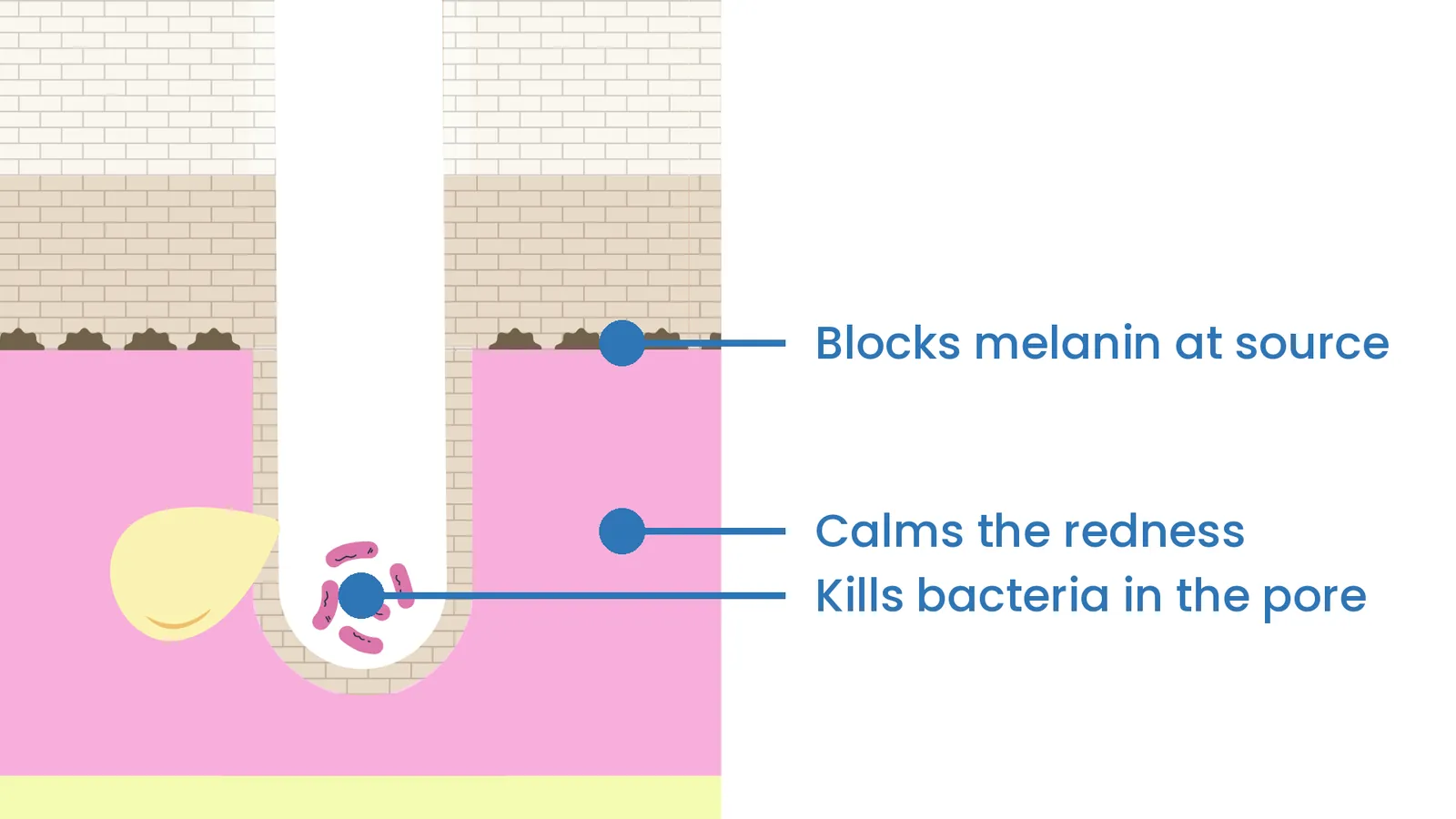
Hyaluronic Acid vs Glycolic Acid
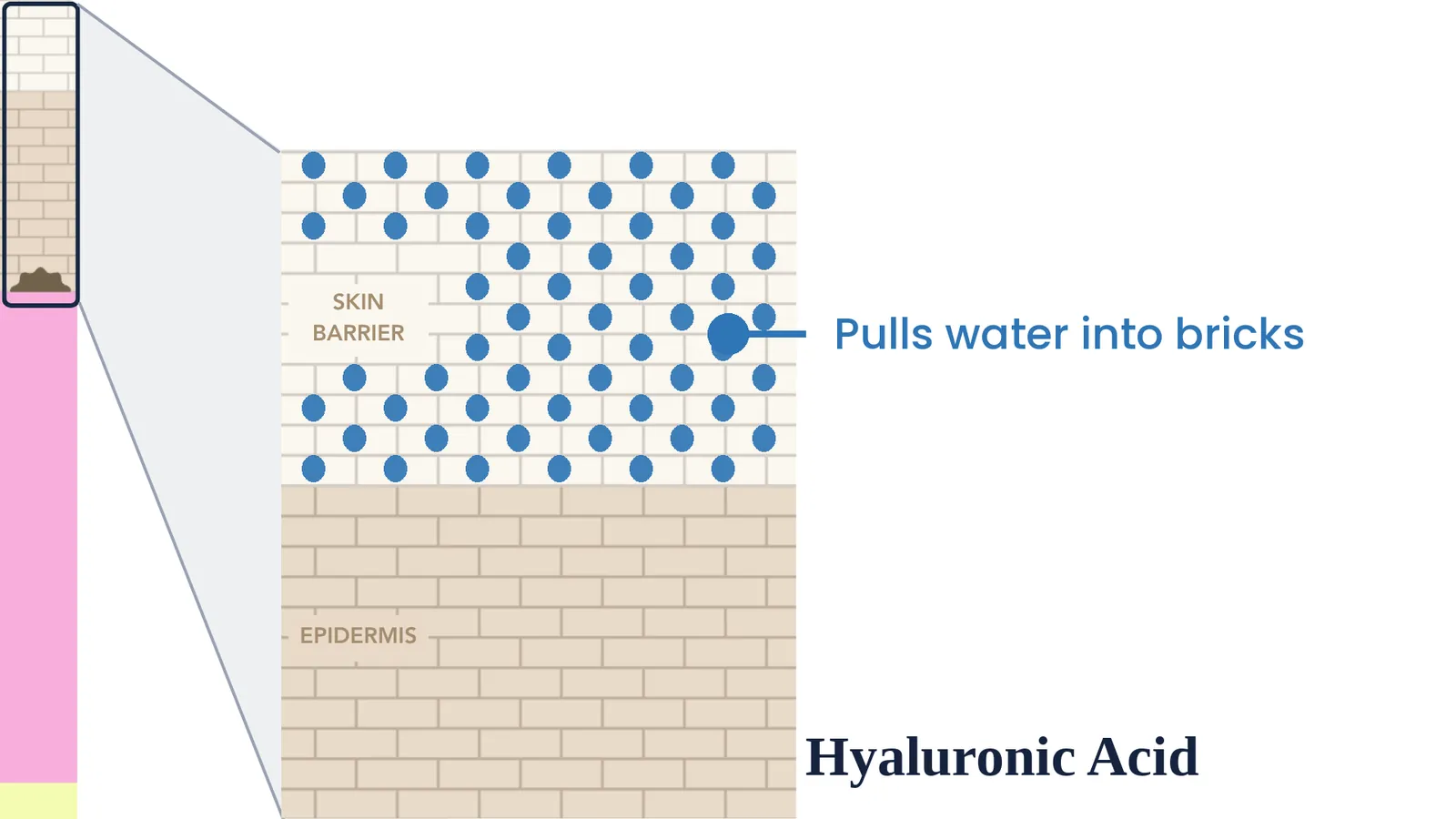
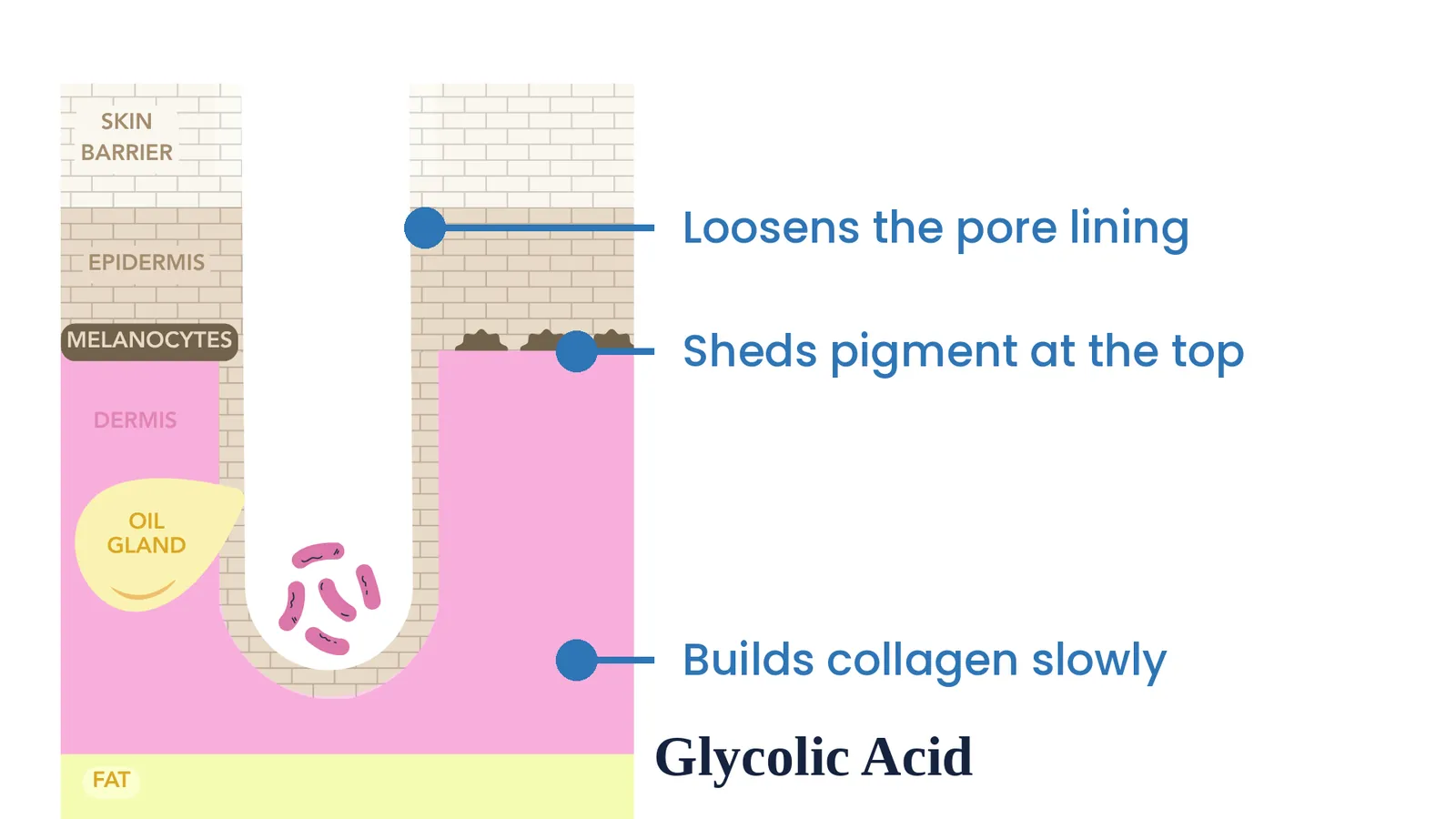
Hyaluronic acid is a moisturizing ingredient that pulls water into the skin and holds it there. It treats nothing, and it suits every skin type. Glycolic acid is an exfoliant that loosens dead cells off the surface, so skin looks smoother and brighter. They share the word acid and almost nothing else, which is why most routines end up using both rather than choosing.
What you do
A serum or lotion applied to slightly damp skin, with a moisturizer on top. Used alone in dry air it can leave skin feeling tighter.
A toner, serum or pad left on at night. Some people have a stronger peel in a clinic every few weeks instead.
What you will see
Fine dryness lines soften, tightness eases, and skin looks smoother the same day. The change is in comfort, not in the condition.
Softer texture, less dullness, smaller-looking pores, and a gradual fade of surface discolouration.
What it will not do
Hyaluronic acid does not clear acne, fade dark marks, reduce redness or build collagen. It holds water.
Glycolic acid has no moisturizing effect at all. Used too often it leaves skin tight, flaky and irritated.
How long until it works
Hydration is immediate. It is also short-lived, which is why it goes on daily.
Brightness comes early. Discolouration takes a few months of steady use.
How long it lasts
Water leaves the skin steadily. A moisturizer over the top slows that down.
Turnover returns to its usual pace within a few weeks of stopping.
The downside
One of the best-tolerated ingredients in skincare. In very dry air it can pull water out of the skin instead of in, which is why a moisturizer goes over it.
It can sting on application, and it makes skin more sensitive to sun. Daily sunscreen is not optional with an AHA.
Cost
It is already in a large share of drugstore moisturizers and serums.
Drugstore serums and toners are cheap. A course of in-clinic peels costs considerably more.
The at-home or drugstore version
The serum on the shelf is the same molecule a clinic uses. The injected version is a different product entirely — a filler placed under the skin to add volume, which no serum can do.
Drugstore glycolic acid works at the surface, slowly and without peeling. A clinic peel is the same molecule, stronger and buffered differently, so it reaches deeper and works faster.
Only one of them behaves like an acid
Glycolic acid is an acid in the way you expect: It dissolves the bonds holding dead surface cells together. That is why it tingles, why it brightens, and why it makes skin sun-sensitive.
Hyaluronic acid is an acid only on paper: It is a humectant, a molecule that binds water. It does not exfoliate, does not sting, and does not change the pH of anything on your face.
So the shared word is a coincidence of chemistry: Comparing them is closer to comparing a medicine to a glass of water than to comparing two treatments.
Using them together, and in what order
They pair well, and the pairing fixes a real problem: Glycolic acid leaves skin drier and more sensitive. Hyaluronic acid puts water back and makes the acid easier to keep using.
Order: acid first on clean skin, then hyaluronic acid, then moisturizer: Give the acid a couple of minutes to settle before anything goes over it.
There is no interaction to worry about: Neither cancels the other out, and no gap is needed between them beyond that short pause.
Which one your skin actually needs
Choose glycolic acid if the problem is rough, dull or congested skin: Bumpy texture, blackheads, a lack of glow and mild surface discolouration are what it does.
Choose hyaluronic acid if the problem is tightness, flaking or dryness: Those need water, and an exfoliating acid will make them worse.
If your skin is both dry and rough, start with the hydration: Building the barrier back for two weeks before adding an acid is how people avoid quitting the acid in the first fortnight.
Before you start
Add one new active at a time and give it at least six weeks
Start glycolic acid two or three nights a week, not nightly
Apply hyaluronic acid to damp skin and always seal it with a moisturizer
Wear broad-spectrum sunscreen every morning while using any AHA
Visible flaking means the barrier is damaged, not that the acid is working
Skip the acid on any night your skin already feels sore or tight