Hyperpigmentation vs Freckles
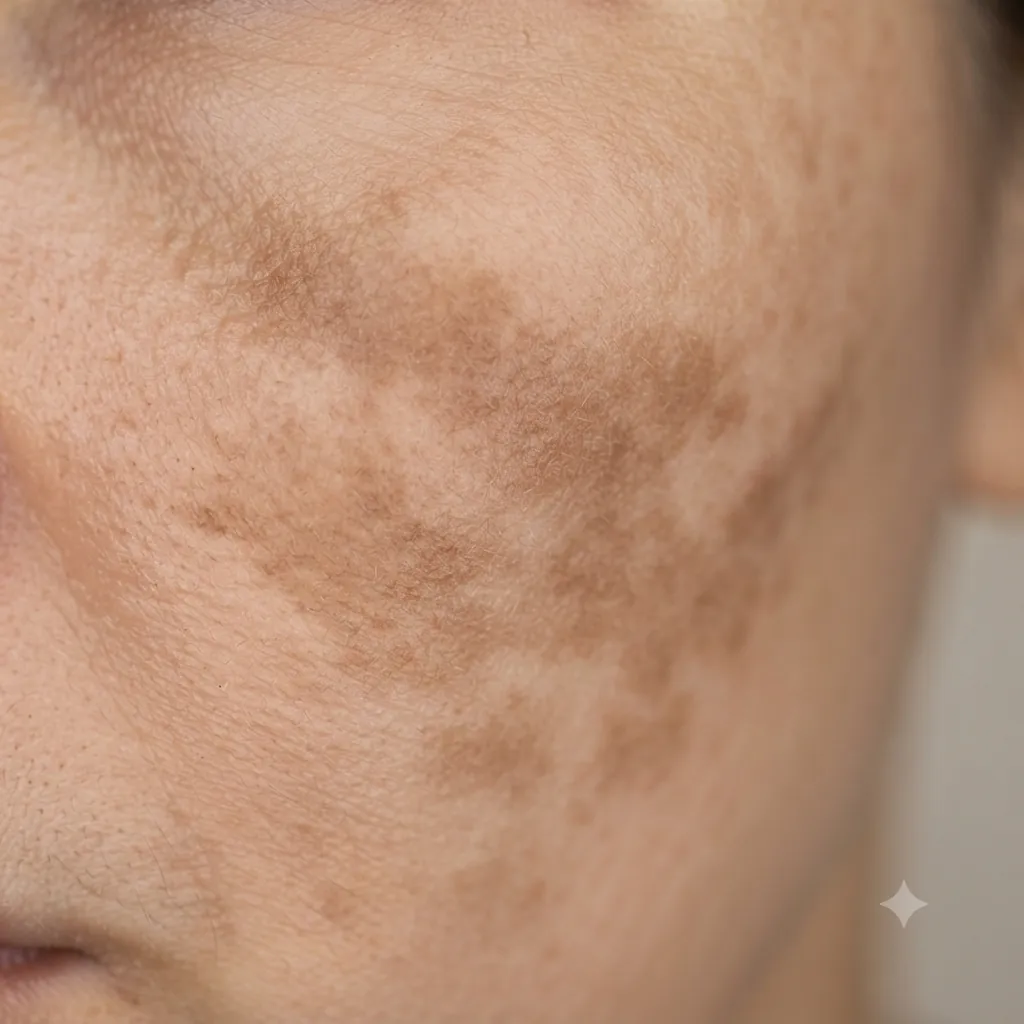
Hyperpigmentation is the umbrella term for any darkening of the skin. Freckles are one kind of hyperpigmentation, not its opposite. Freckles are small, flat brown dots that appear in childhood, darken in summer and fade in winter. They run in families. The other common kinds — marks left behind by spots, melasma, and sun spots — look different and behave differently, and naming the kind is what decides the treatment.
What it is
Extra pigment sits in the skin for some reason: sun, inflammation, hormonal changes, or years of exposure. It is a description, not one diagnosis.
Freckles are not extra pigment cells. The usual number of cells simply make more pigment when sunlight hits them, and that reaction is inherited.
What it looks like
It might be a scattering of dots, a large blotchy patch, or a flat brown mark exactly where a spot used to be.
One to four millimetres across, flat, and grouped where the sun lands hardest. Usually dozens at once.
Colour
Pigment sitting deeper in the skin looks greyer. Fresh marks from inflammation can look pink or red before they turn brown.
Each dot is much the same shade as the ones around it.
Shape and edges
Sharp edges point to freckles and sun spots. Soft, blurry edges point to melasma. The edge is the fastest clue you have.
Every dot has a defined border and a flat surface. You cannot feel them with a fingertip.
Where it shows up
Sun-exposed skin for the sun-driven kinds. Anywhere at all for marks left by acne, eczema or an injury.
The high points that catch the most sun. Rare on skin that stays covered.
What makes it worse
Ultraviolet light darkens almost every kind. Ongoing inflammation keeps feeding the marks left by acne or eczema.
They darken within days of sun and lighten over the winter. Nothing you eat or drink changes them.
What it does over time
Marks from inflammation fade over months. Sun spots build up and stay. Melasma fades and returns.
Freckles darken and fade every year, and they often become less obvious after the thirties and forties.
How it is treated
There is no single treatment, because there is no single cause. Naming the kind decides everything that comes after.
Freckles are harmless. Daily sunscreen keeps them paler through the summer, and that is the only thing that reliably works.
Freckles are a kind of hyperpigmentation, not the alternative to it
"Hyperpigmentation" only means the skin is darker in one place than the skin next to it: It covers freckles, sun spots, melasma and the brown marks left behind by acne. Searching the word on its own is a common dead end, because advice written for one kind can be useless or harmful for another.
Freckles are the easiest kind to recognise: Small, flat, many at once, on the nose and cheeks and shoulders, darker in August than in February, and present since early childhood. Add a parent or a sibling with the same pattern and the case is closed.
The other three kinds people usually mean
Post-inflammatory marks are flat brown patches left where the skin was inflamed: They sit exactly where a spot, a scratch or an eczema patch used to be, which is the giveaway. They fade on their own over months — faster with sunscreen, slower if the area keeps getting picked.
Melasma is larger patches with soft, blurry edges, usually symmetrical across both cheeks, the forehead or the upper lip: It is driven by sun, heat and hormonal changes, including from hormonal birth control. It fades and returns rather than clearing once. Sun protection is the treatment that matters most, and it comes back without it.
Sun spots are separate, sharply edged brown spots on skin that has had years of sun: They appear on the face, the backs of the hands, the chest and the shoulders, and they do not fade in winter. Most people start seeing them from their thirties onward.
What each one actually needs
Freckles need nothing at all: Sunscreen keeps them lighter. Acids and lasers aimed at freckles are treating a normal, harmless pattern.
Marks from acne need the acne treated first: A fading cream works well on a settled mark. It loses to a spot that keeps returning in the same place.
Sun spots respond well to being removed one at a time: Cryotherapy, lasers and intense pulsed light clear them quickly, and sunscreen slows new ones.
Melasma is the one where the wrong treatment backfires: Heat and light can darken it, so the same laser that erases a sun spot can set melasma back months.
See a doctor if
One spot is changing in shape, colour or size
One spot looks clearly different from all the others around it
A dark spot bleeds, itches, crusts or will not heal
Freckle-like spots appear suddenly in adulthood
A dark patch keeps spreading despite daily sunscreen
You want a dark patch treated and are not sure which kind it is