Juvelook vs Rejuran
Juvelook is better for skin that has gone soft, crepey or slightly hollow. It leaves tiny lactic acid particles in the skin that push your body to build its own collagen over the following months. Rejuran is better for rough texture, fine lines, shallow acne scars and skin that is thin or easily irritated. It uses polynucleotides, which are fragments of salmon DNA, to nudge the skin into repairing itself. Both are courses of two to three visits, and no trial has put them head to head.
What is in the syringe
The particles are a close relative of the material in Sculptra. The hyaluronic acid is there to carry them and to hydrate.
Purified DNA fragments. They are not a filler and they do not add volume.
What it improves
Softening jawline, crepey cheeks, large pores, and skin that has thinned. It can gently restore mild volume loss.
Fine lines, rough texture, shallow acne scars, dullness, and skin that reacts to everything.
How soon you see something
The hyaluronic acid gives a short-lived plumping in the first week. The collagen change builds over two to three months.
Nothing changes on the day. Skin usually feels smoother and calmer first, and looks smoother later.
How many sessions
It is a course, not a single appointment.
Most people then repeat one session every six to twelve months.
How long it lasts
Collagen made in response to the treatment fades slowly.
It is usually described as maintenance rather than a one-off fix.
What it feels like
Numbing cream first. Some tenderness and swelling for a day or two.
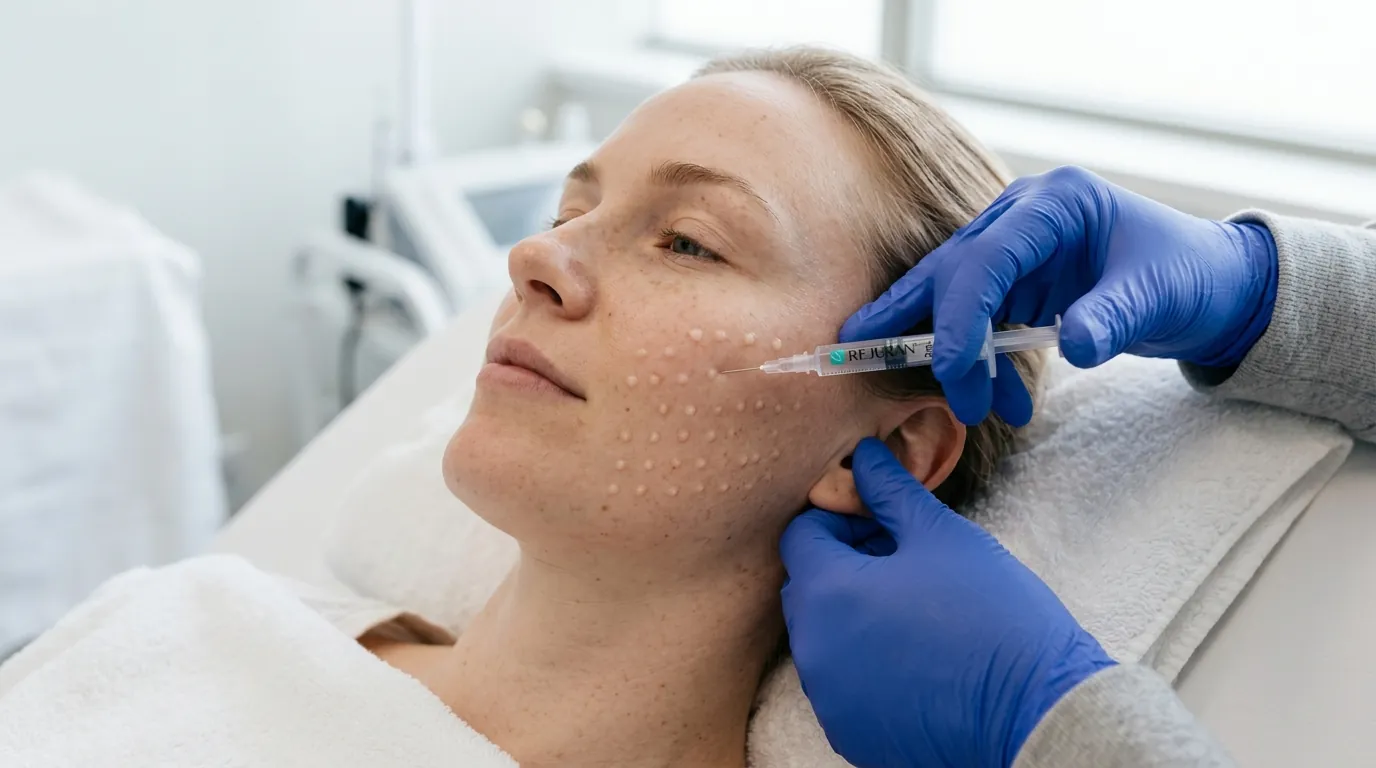
Small raised bumps sit at each injection point afterwards. They flatten in one to two days.
What it will not do
A frown line caused by muscle needs botulinum toxin, not a collagen stimulator.
Rejuran works on the quality of the skin. A hollow cheek stays hollow.
Downtime and side effects
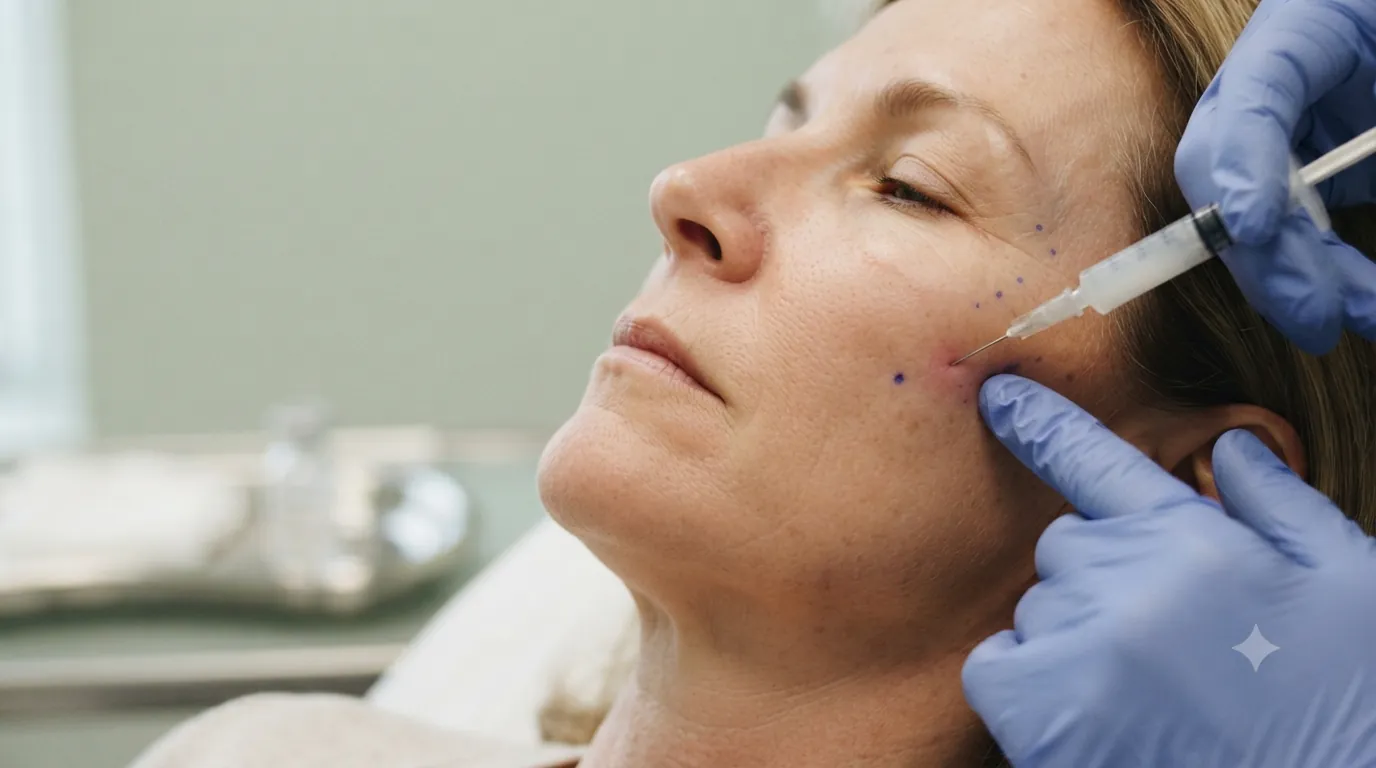
Small lumps under the skin are the uncommon risk, as with any collagen stimulator. Even spread and massage reduce it.
Usually gone in 48 hours. Most people plan it a few days before anything social.
Cost
Ask for the price of the whole plan rather than one visit.
Maintenance later is usually one session at a time.
The at-home or drugstore version
The particles have to sit in the layer where collagen is made, a few millimetres down. Nothing you rub on gets there.
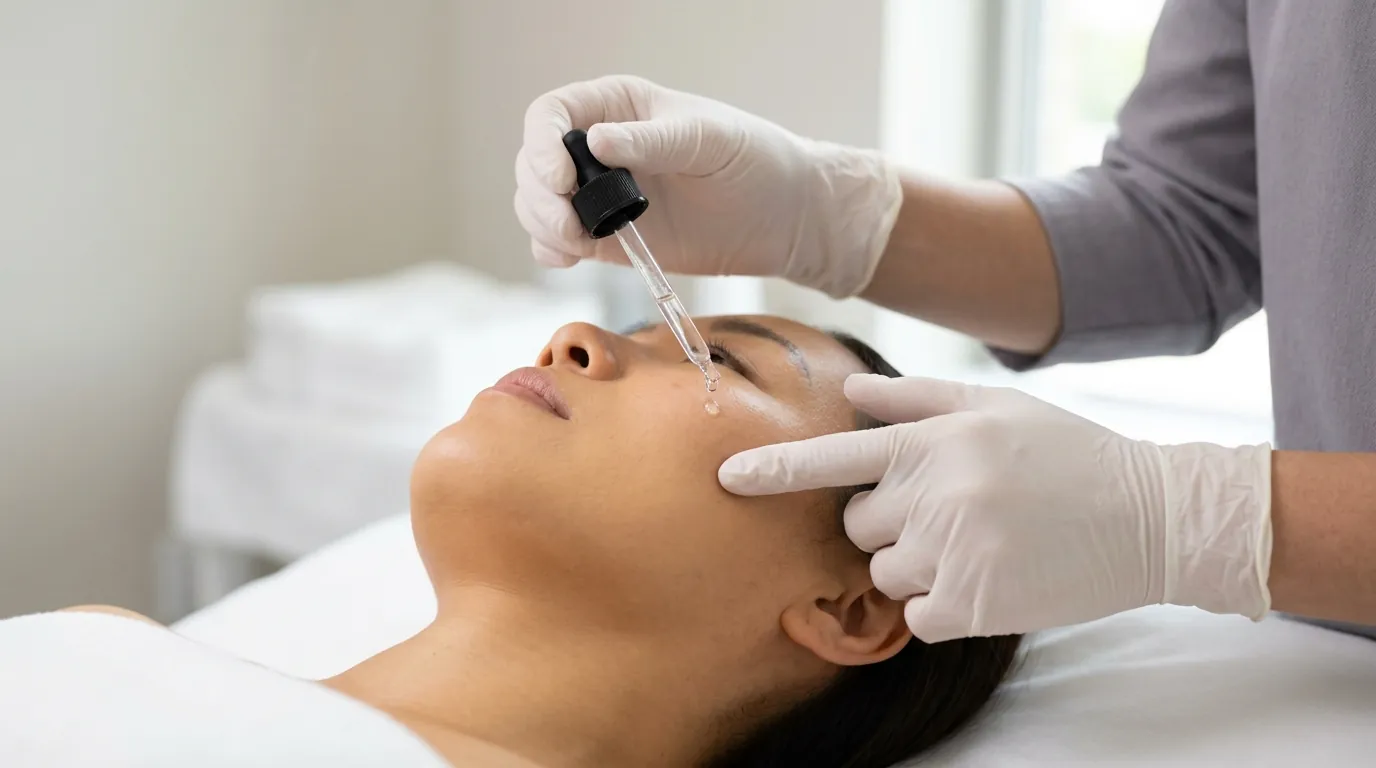
PDRN creams and ampoules exist and are pleasant on the skin. Injected polynucleotides are placed inside the skin. A serum sits on top of it.
Who each suits
They promise similar things by different routes
Juvelook works by irritating the skin on purpose: The tiny particles are treated as something to wall off, and the repair response lays down new collagen. That takes months, which is why nothing looks different at first.
Rejuran works by supplying material the skin uses to repair: Polynucleotides sit in the skin and appear to support healing and hydration rather than force a building response.
That difference shows up in what each one is good at: A collagen stimulator suits skin that has gone slack. A repair booster suits skin that is intact but rough, thin or irritable.
Where these are used
Neither one is approved in the United States for these uses: Both are widely used in Korea and in many other countries. Some US clinics offer them anyway. Ask directly what you are being injected with, and where the clinic gets it.
Has anyone compared them directly
No trial has put Juvelook against Rejuran: The research behind each one measures skin before and after, not one product against the other. Most of those studies are small and run by the people selling the product.
Clinics that offer both tend to use them for different problems: That is worth hearing. But it is opinion from practice, not proof from a trial.
Before you book
Say what bothers you rather than naming a product. Slack skin and rough skin lead to different answers.
Ask for the total cost of the course, not the price of one session.
Ask how many of these the injector has done, and on skin like yours.
Ask what happens if you dislike the result. Neither one can be dissolved, so the honest answer is that you wait.
If you have very sensitive or reactive skin, say so before anything is booked.