Melasma vs Lentigo
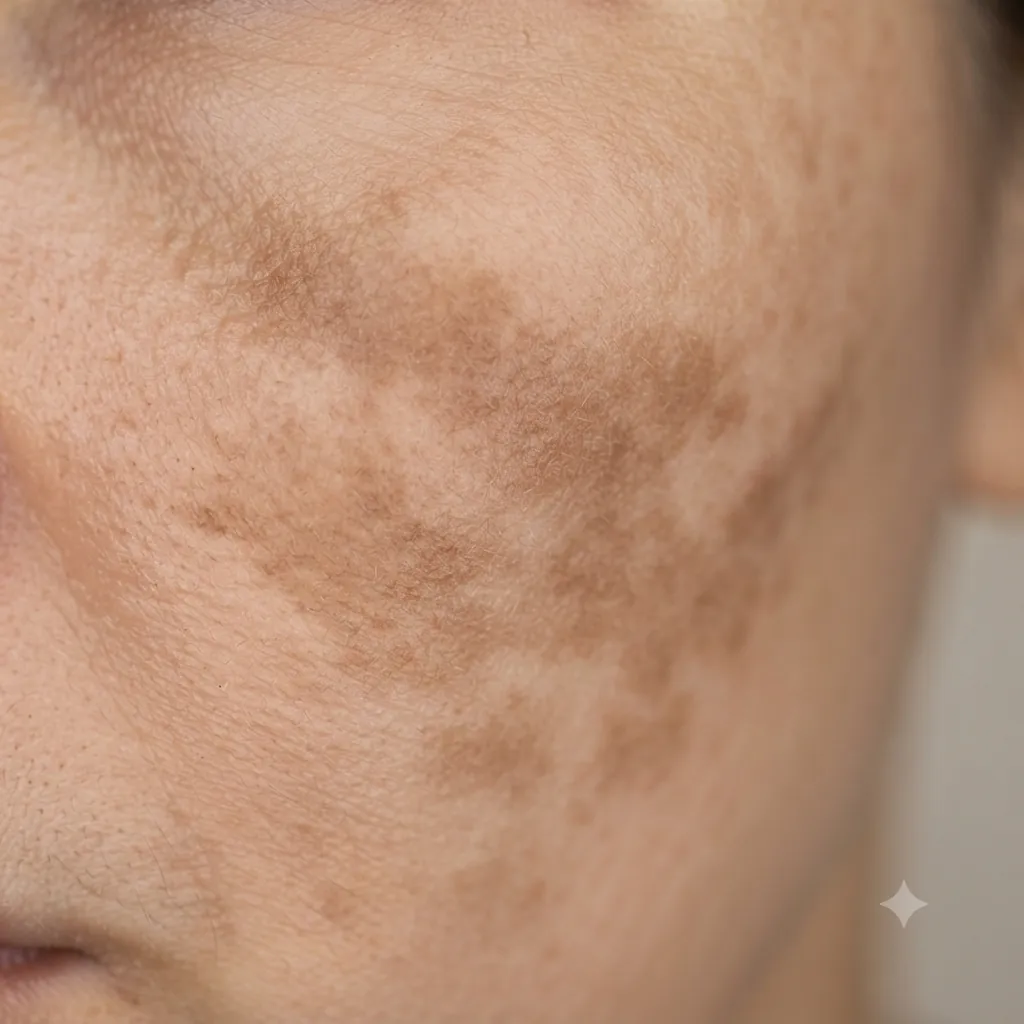
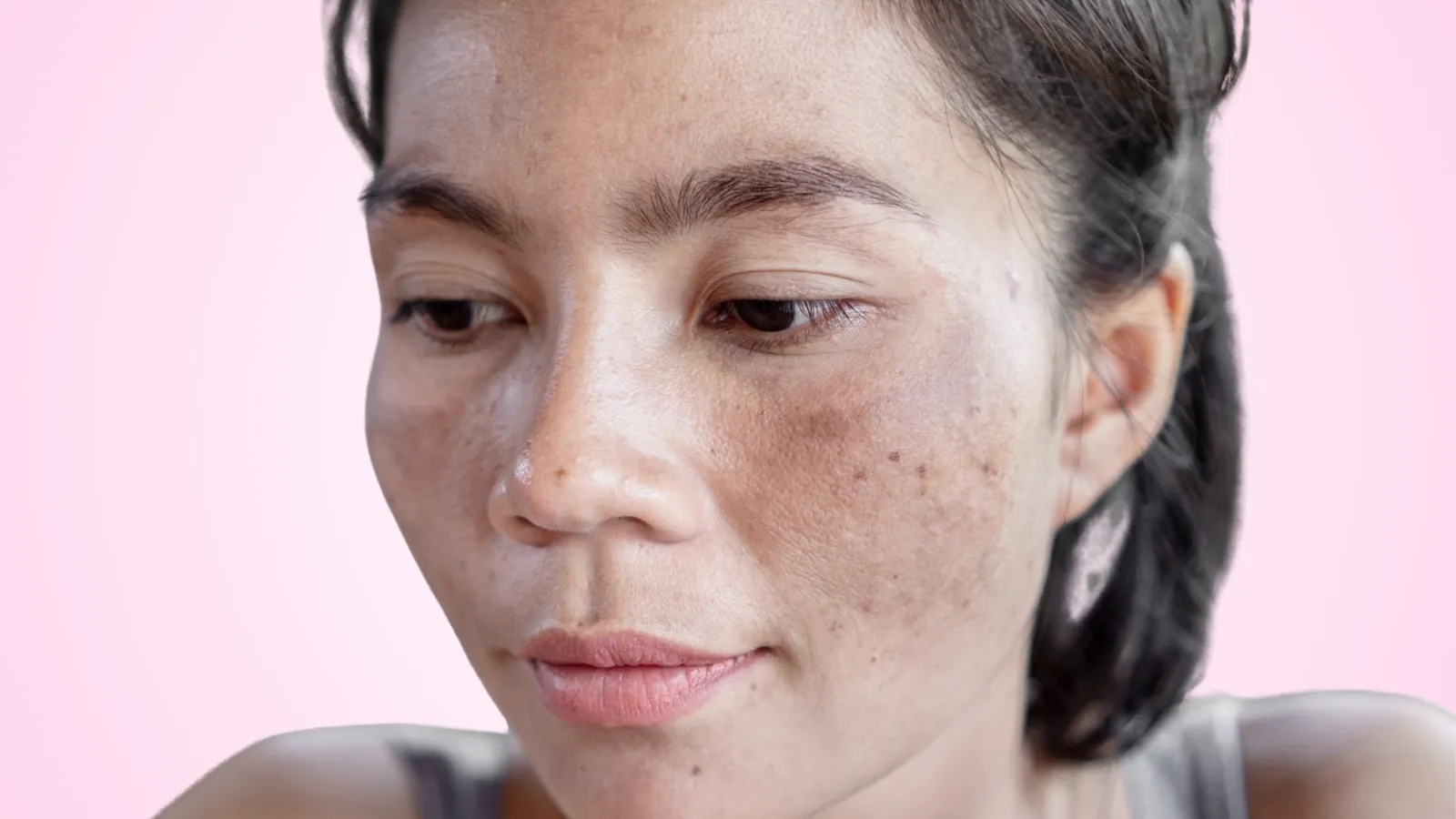
Melasma is a soft-edged brown patch with no border you can point to. It covers a broad area and usually matches on both sides of the face. A lentigo is one flat brown spot with a clean edge. Solar lentigo is the medical name for a sun spot, but lentigo is a family of words, and the members do not all mean the same thing.
What it is
Sun, heat and hormonal changes push your pigment cells to make extra melanin. The number of cells is normal.
In a lentigo the pigment cells themselves are a little more numerous in that one patch, and they hold on to more pigment.
What it looks like
Fairly even brown across both cheeks, the forehead, the upper lip or the jawline.
Round or oval, a few millimetres to about a centimetre. Usually there are several, with normal skin in between.
The edge
The colour fades out into the skin around it. There is no line where it stops.
A defined border. If you can outline it with a fingertip, it is a lentigo rather than melasma.
Where it shows up
Cheeks, forehead, upper lip and jawline. Cover half your face in the mirror. If the two sides broadly match, that points to melasma.
Face, backs of the hands, forearms, chest and shoulders. Some kinds turn up anywhere, including on skin the sun never reaches.
What it does over time
Lighter through the winter, darker from spring onward. It rarely clears once and stays clear.
A solar lentigo does not fade in winter, and more appear while sun exposure continues.
How it is treated
Daily broad-spectrum sunscreen matters more than anything else. Hydroquinone, azelaic acid, tranexamic acid and gentle peels fade it. Lasers are used carefully, if at all.
Freezing, lasers and intense pulsed light remove a solar lentigo well. Any spot a clinician is unsure about gets examined, and sometimes sampled, before anything is aimed at it.
Lentigo is a family of words, not one diagnosis
Solar lentigo is the common one: It is a harmless flat brown spot built by years of sun. Sun spot, age spot and liver spot are the everyday names for exactly this. Most people who look up "lentigo" have one of these.
Lentigo simplex appears in childhood: It is a small dark spot that is not caused by sun and can show up anywhere on the body, including skin that stays covered. It is harmless.
Lentigo maligna is a different matter: It is an early melanoma that grows slowly on skin with heavy long-term sun exposure, usually the face, neck or scalp, usually in older adults. It can look very like a solar lentigo, and that resemblance is why it gets missed.
Telling a lentigo from melasma at the mirror
Count them: Lentigines come as separate spots you can point at one by one. Melasma is one continuous area with vague limits.
Check the seasons: Melasma is lighter in February and darker in August. A lentigo looks the same all year.
Check the symmetry: Melasma tends to mirror itself across the face because the trigger is inside the skin. Lentigines follow wherever the light happened to fall.
The one worth having looked at
A single spot that behaves differently from the rest deserves an appointment: The useful signal is not how dark a spot is. It is whether one spot stands out from the crowd around it.
Slow change is the pattern that matters here: Lentigo maligna often spreads over years, with an uneven edge and more than one shade of brown inside it. People frequently think it is just another age spot.
A dermatologist can look at it with a dermatoscope: That is a lit magnifier held against the skin, and it sorts out most spots in the room without anything being cut.
See a doctor if
One spot is changing in shape, colour or size
One spot looks clearly different from all the others
A flat brown patch is slowly widening with a ragged edge
There is more than one shade of brown inside a single spot
A dark spot bleeds, itches, crusts or will not heal
You want a spot treated and are not certain what it is