Moxi vs Microneedling
Moxi is a light resurfacing laser. It is aimed at tone and early pigment, and it is chosen because the recovery is short. Microneedling is the stronger one for texture. It has the better evidence for acne scars and rough skin, and it uses no light, so it is the safer choice on deeper skin tones. Nobody has compared the two in a proper trial.
What touches your skin
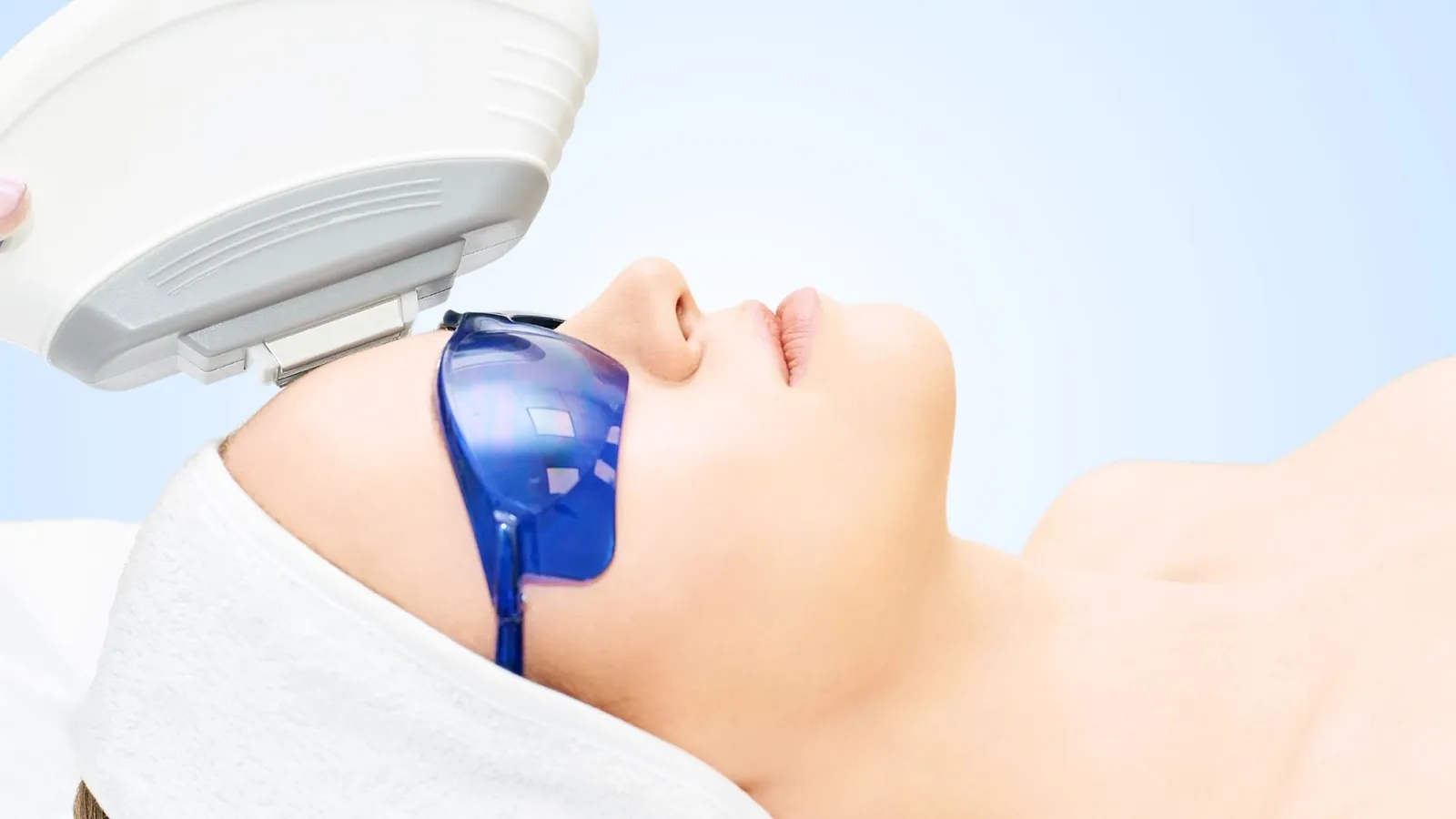
A fractional laser heats microscopic columns of skin and leaves the skin between them alone. It does not remove the surface layer.
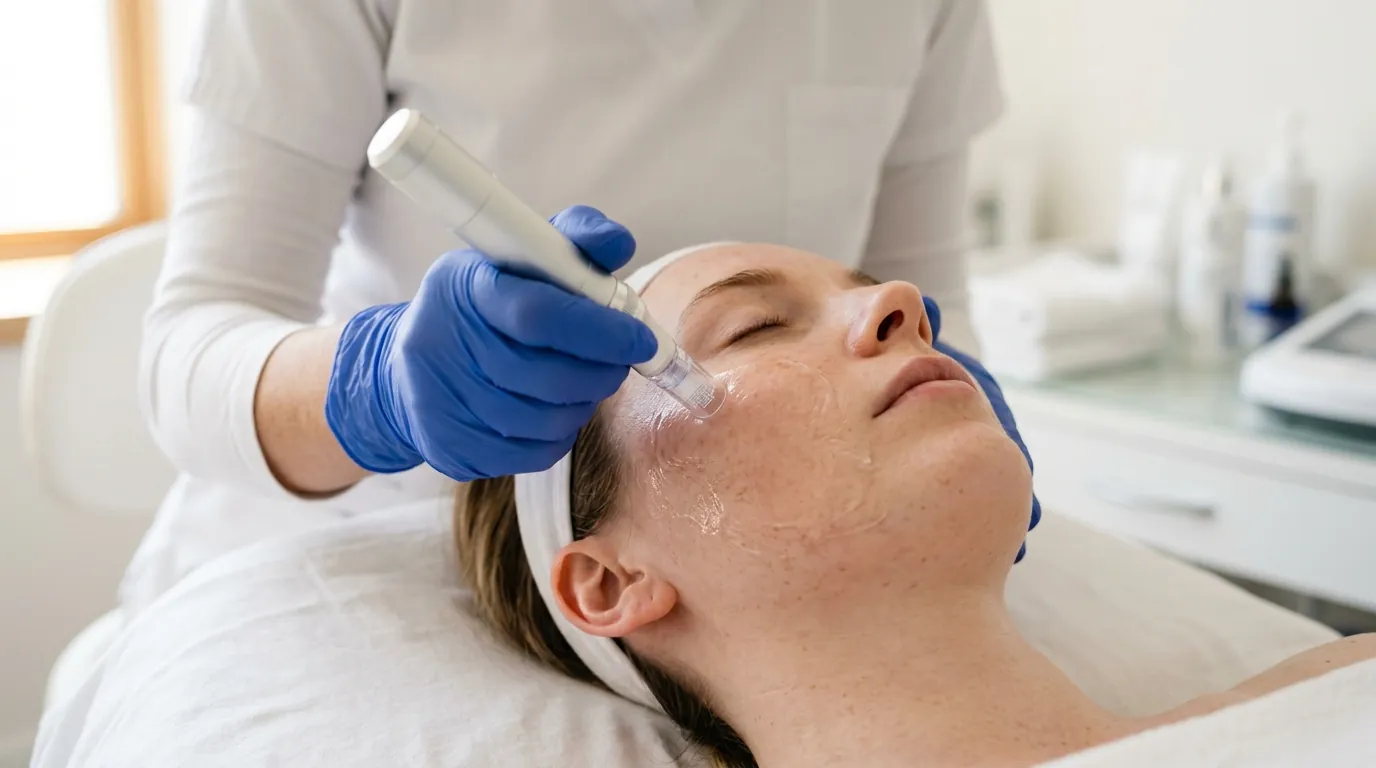
The needles puncture past the epidermis into the dermis, the layer where collagen is made. Healing those small wounds is what builds new collagen.
What it is best at
Sun damage, patchy colour, marks left after spots, and skin that has lost its brightness.
Rolling and boxcar acne scars, open pores and general roughness. This is where the published evidence sits.
What it will not do
It is a light treatment by design. A deep acne scar or a heavy indent needs something that reaches further down.
Needling works on shape, not on colour. Brown patches and flushing need a light-based treatment instead.
What you will see
Darkened flecks rise to the surface over a day or two, then shed. Skin looks brighter once they clear.
Change builds over months as new collagen forms. Deep, narrow icepick scars improve least.
How long until it works
The usual plan is three to four sessions, four to six weeks apart.
A course is three to six sessions, about a month apart.
How long it lasts
New pigment arrives every summer, so most people repeat once or twice a year.
New collagen stays, but skin keeps ageing.
What it feels like
Numbing cream first. The treatment itself is quick, which is part of the appeal.
Numbing cream first as well. The forehead and the jawline are the tender spots.
Downtime
Pink on day one, then a sandpaper feel and tiny dark specks that flake away.
Redness for one to three days, then light flaking.
Skin tone
Moxi is one of the gentler lasers and is used on a wide range of skin tones. Any laser still carries some risk of a patch healing darker or lighter.
Needling has no pigment target at all. That is why it is often the first choice for deeper skin tones.
Cost
Ask what three sessions cost, not one.
Ask for the price of the whole course.
The at-home or drugstore version
No home device makes fractional laser columns. Home "laser" wands emit low-level light at a small fraction of the power and work by a different mechanism.
Home rollers use short, blunt needles that dull quickly and are hard to keep clean. They pierce enough to inflame skin, not enough to remodel it. A reused roller is the most common way people pick up an infection from needling.
Who each suits
Tone versus texture
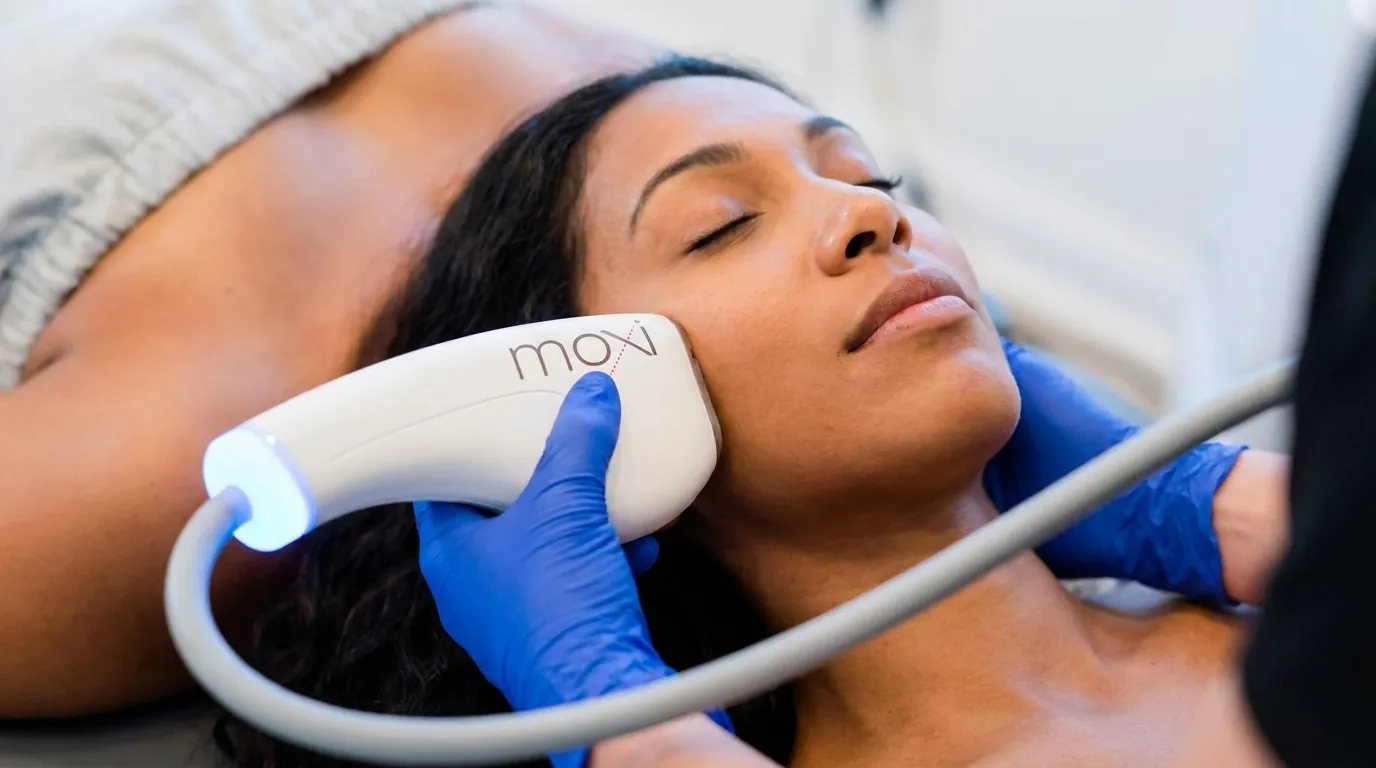
Moxi is a tone treatment first: Its wavelength is absorbed by water in the skin, and the columns it makes carry damaged pigment up to the surface, where it flakes off. That is why the visible result is a brighter, more even face.
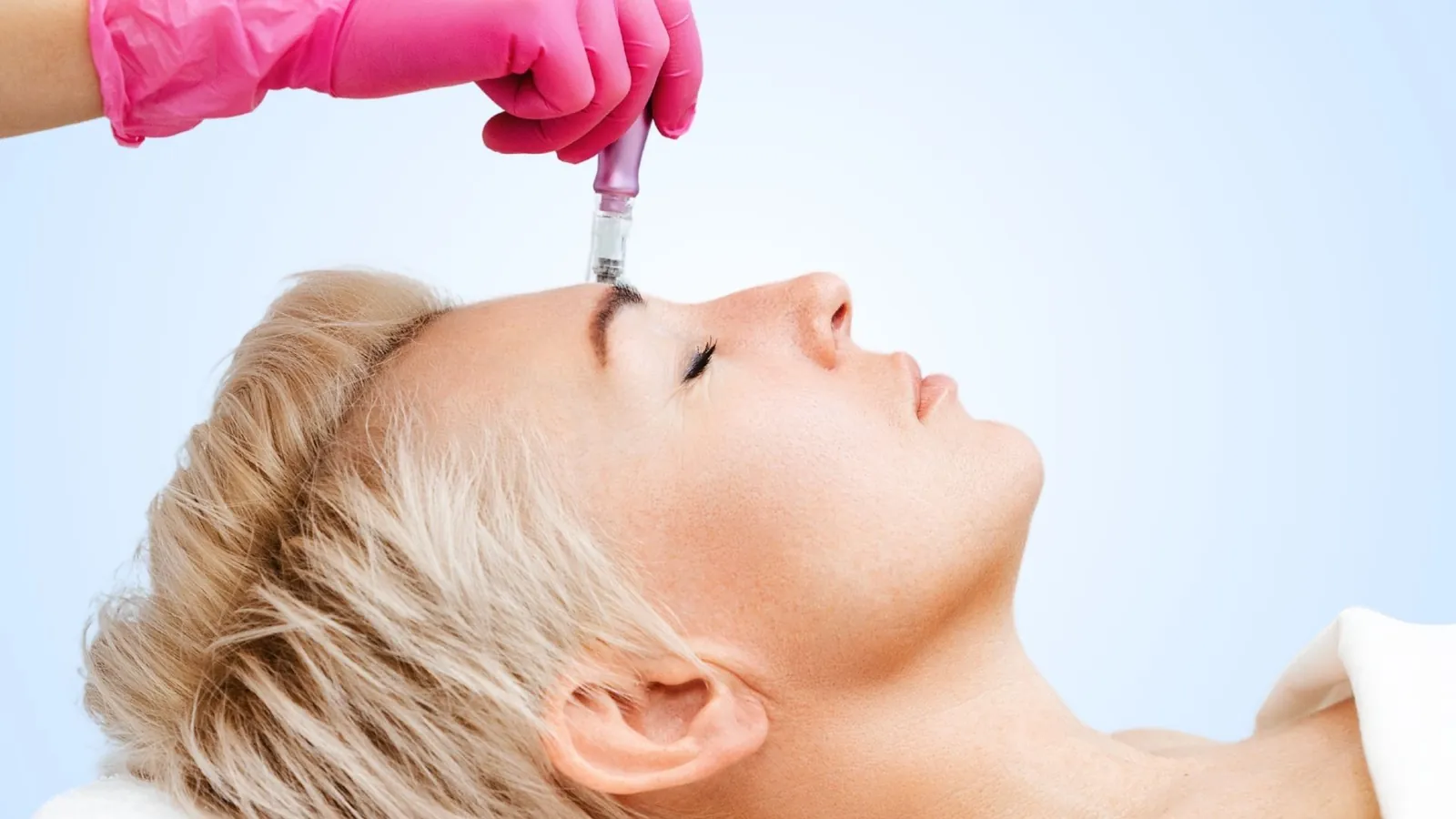
Microneedling is a texture treatment first: The punctures reach the dermis, and repairing them lays down collagen that can lift the floor of a shallow scar. Colour is not part of what it does.
Ask yourself what you would photograph: If you would take a picture of a patch of colour, Moxi is closer. If you would take it in side lighting to show an indent, needling is closer.
The downtime is not the same kind of downtime
Moxi gives you speckles: For two to four days the skin feels like fine sandpaper and carries tiny dark flecks. Make-up sits badly on it. Most people feel comfortable in public again within three to five days.
Microneedling gives you redness: You look sunburnt for one to three days and then flake lightly. Make-up is usually fine after a day.
Neither one keeps you at home: The difference is what your skin looks like in close-up, not whether you can work.
Skin tone changes the safer answer
Moxi is one of the gentler lasers, and it is used across a wide range of skin tones: It is not risk-free. Any device that puts light into skin can leave a patch that heals darker or lighter, and heat can aggravate melasma.
Microneedling has no pigment target: There is no light, so the mechanism behind laser burns is absent. Skin of any tone can darken after inflammation, but the main laser risk does not apply.
Nobody has compared them head to head
Microneedling has years of published work, most of it on acne scars, where it clearly improves shallow rolling and boxcar scars. Moxi has much less published work, and what exists looks at tone and early sun damage rather than scars. No trial has put the two against each other.
Before you book
Name your main complaint in one sentence. Colour points to Moxi. Indents and roughness point to needling.
Ask for the cost of the full course either way.
With deeper skin, ask how often the clinic treats your skin tone and what settings they use.
If you have melasma, say so before booking any laser. Heat can make it worse.
Do not book either one within a few weeks of a sun holiday.