Psoriasis vs Poison Ivy
Psoriasis is a long-term immune condition. It builds thick scaly patches over weeks and returns to the same places for years. Poison ivy is an allergic reaction to a plant oil. It appears one to three days after contact, blisters, itches fiercely, and is gone inside three weeks.
What it is
The immune system speeds up skin cell production. Cells pile up before old ones shed, and the patch thickens. It runs in families.
An oil called urushiol, from poison ivy, oak and sumac, gets onto the skin. The immune system reacts to it a day or two later.
How fast it appears
A patch starts small and thickens. It does not arrive overnight.
The very first time you react it can take a week or more. After that it is much faster.
What it looks like
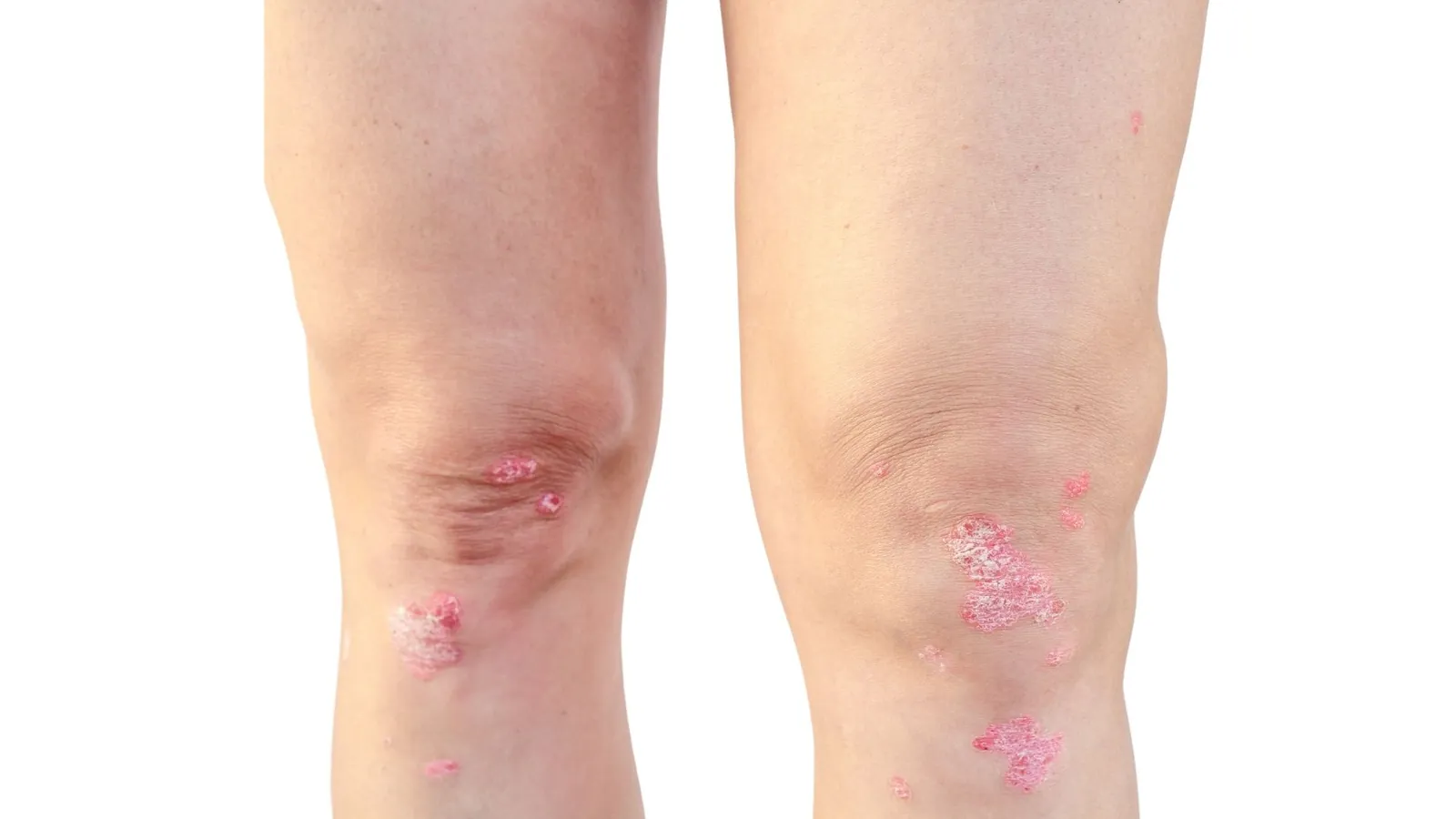
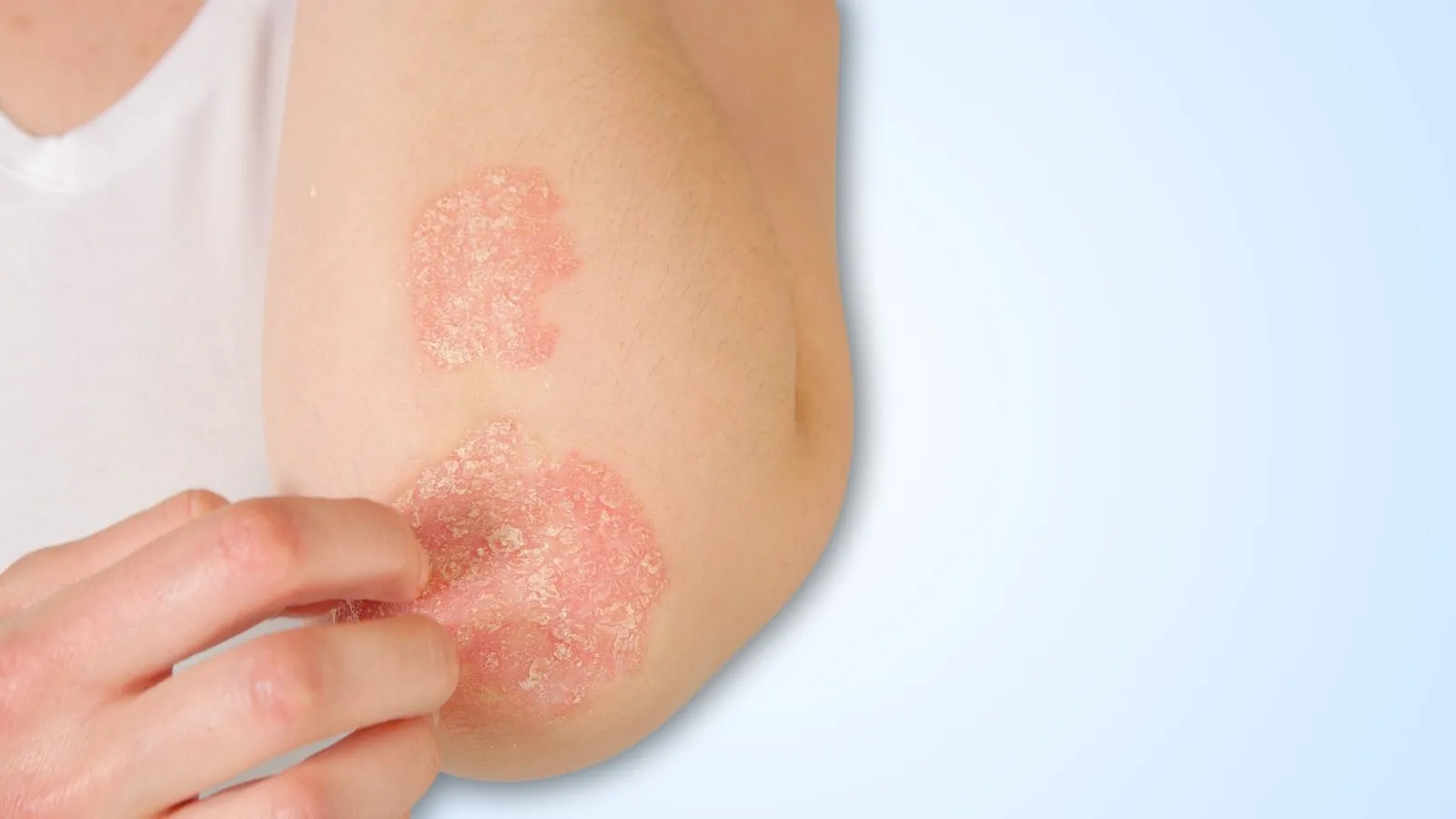
Raised plaques with dry flakes on top and a sharp border. On brown and black skin they often look purple, grey or dark brown.
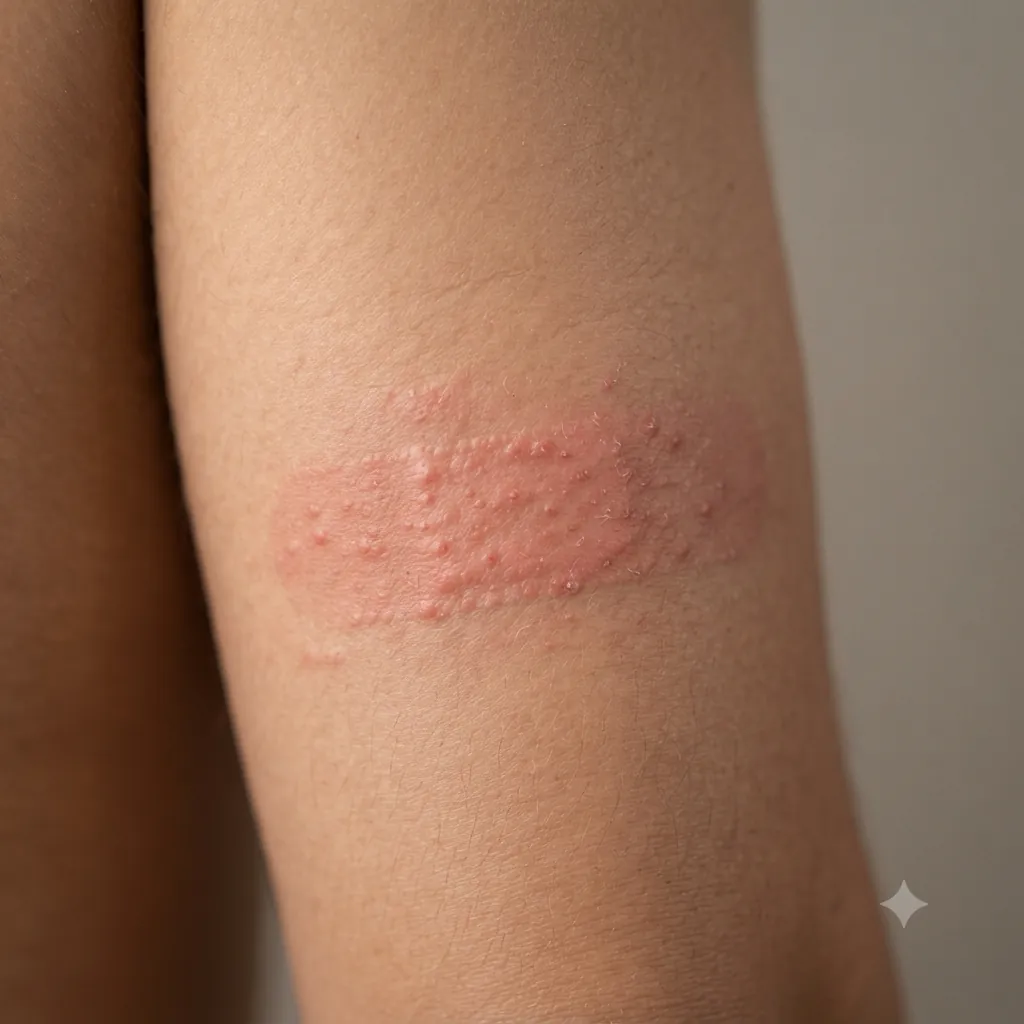
Fluid-filled blisters and angry bumps, often in lines where the plant brushed past. Later the blisters weep and crust over.
The shape and pattern
Both elbows, both knees, both shins. Psoriasis tends to be symmetrical and to return to the same spots.
Lines and blotches that follow how you touched the plant. Nothing about the pattern is symmetrical.
How much it itches
Mild to moderate. Plaques can crack and sting over joints.
Often bad enough to wake you. It is one of the itchiest rashes there is.
Where it shows up
Also the belly button, buttock crease and nails. The same places, year after year.
Ankles, forearms, hands and face are common. It reaches anywhere the oil was carried, including on clothes, tools and a dog's coat.
How long it lasts
A single plaque can last months. The condition itself comes and goes for life.
It clears on its own once the oil is off the skin and the reaction runs its course.
What actually helps
Steroid and vitamin D creams settle a plaque. Widespread psoriasis has light therapy, tablets and injections.
Soap and water within a couple of hours removes some of the oil. After that: cool compresses, calamine, an antihistamine at bedtime, and a steroid cream. A widespread rash usually needs steroid tablets.
Does it come back
Psoriasis is long-term. Treatment controls it rather than curing it.
Nothing lingers in the skin. But unwashed clothing, boots, garden tools and pet fur hold the oil for a long time and can start it over.
When it needs a doctor
Morning stiffness in the fingers alongside scaly patches is worth naming at the appointment. Painful or widespread plaques need prescription treatment.
Rashes over a large area, or on the face and genitals, are usually treated with steroid tablets rather than cream. Yellow crust and spreading soreness mean infection on top.
Why anyone confuses these two
Both can be red, raised and flaky at some point: Halfway through a poison ivy reaction the blisters dry into crusts and scale, which is not far off what a psoriasis plaque looks like. That overlap is where the confusion lives.
The story separates them: Poison ivy has a day attached to it. You were clearing brush, walking a trail, gardening or handling firewood. Psoriasis has no such day, because it drifted in over weeks.
Blisters settle it: Small fluid-filled blisters are a hallmark of poison ivy. They are not part of ordinary plaque psoriasis.
The blister fluid does not spread it
The fluid inside poison ivy blisters is not contagious: It cannot start a new rash on you, and it cannot give the rash to anyone else. This is one of the most widely believed things about poison ivy and it is not true.
New patches over several days is still normal: Thin skin reacts first and thick skin later, and an area that picked up less oil takes longer to show. That looks like spreading, but the whole reaction was set the moment you touched the plant.
The oil is what spreads it: Urushiol stays active for a long time on clothes, boots, gloves, tools and animal fur. Wash all of it in hot soapy water, or you will simply expose yourself again.
Do not scratch either one
Scratching poison ivy delays healing and invites infection: It does not spread the rash. Cool showers, calamine and an antihistamine at bedtime do far more than willpower.
Scratching psoriasis can create a new plaque: Injuring the skin, even by picking at scale, can grow psoriasis in exactly that spot. It is why a picked patch tends to get bigger rather than smaller.
The one that is often mistaken for both
A sudden shower of small scaly spots across the trunk is often guttate psoriasis: It usually follows a throat infection by a week or two. The spots are drop-sized and scaly rather than blistered, they cover the chest, back and limbs, and they often settle over a few months.