Psoriasis vs Rosacea
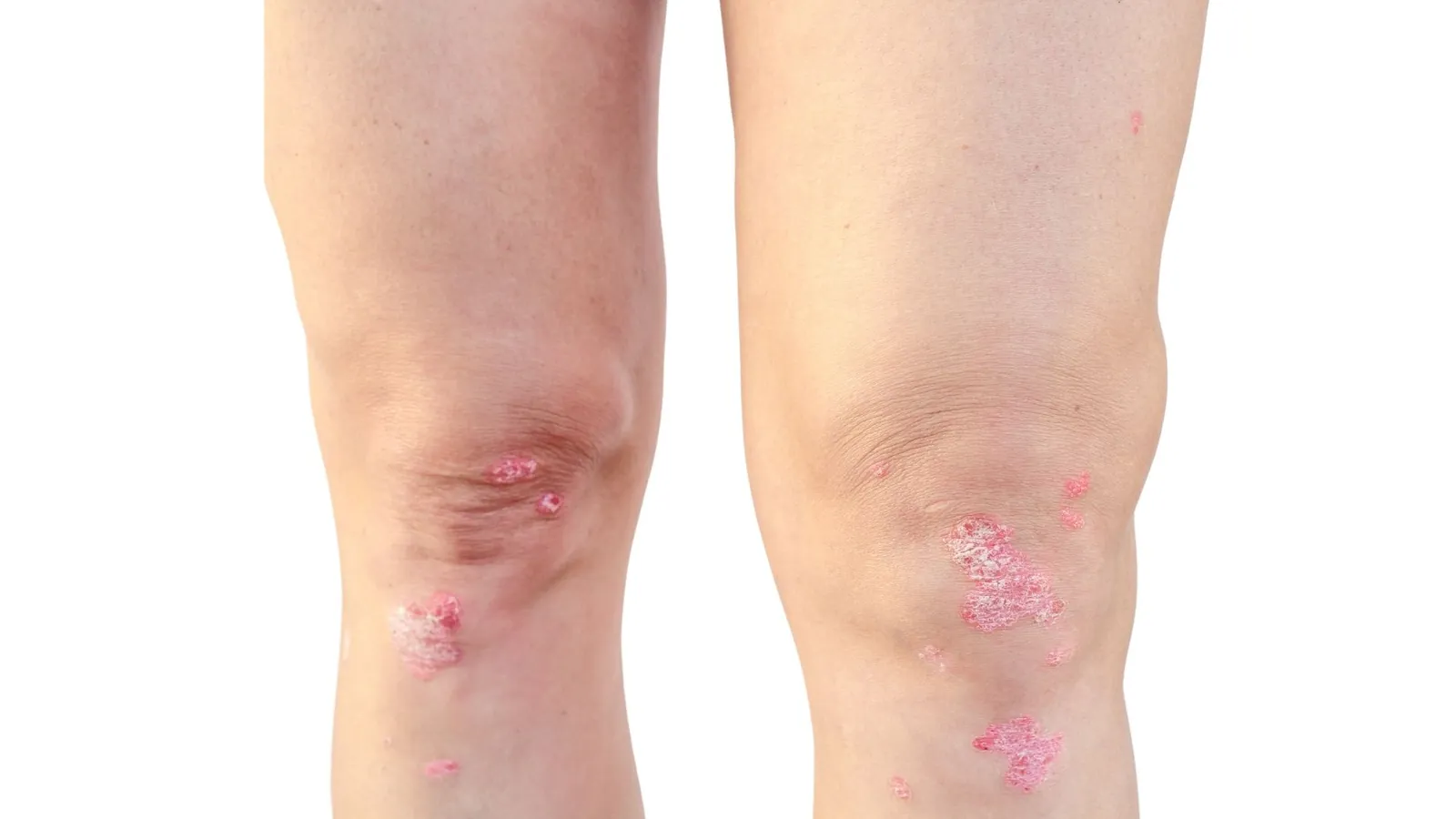
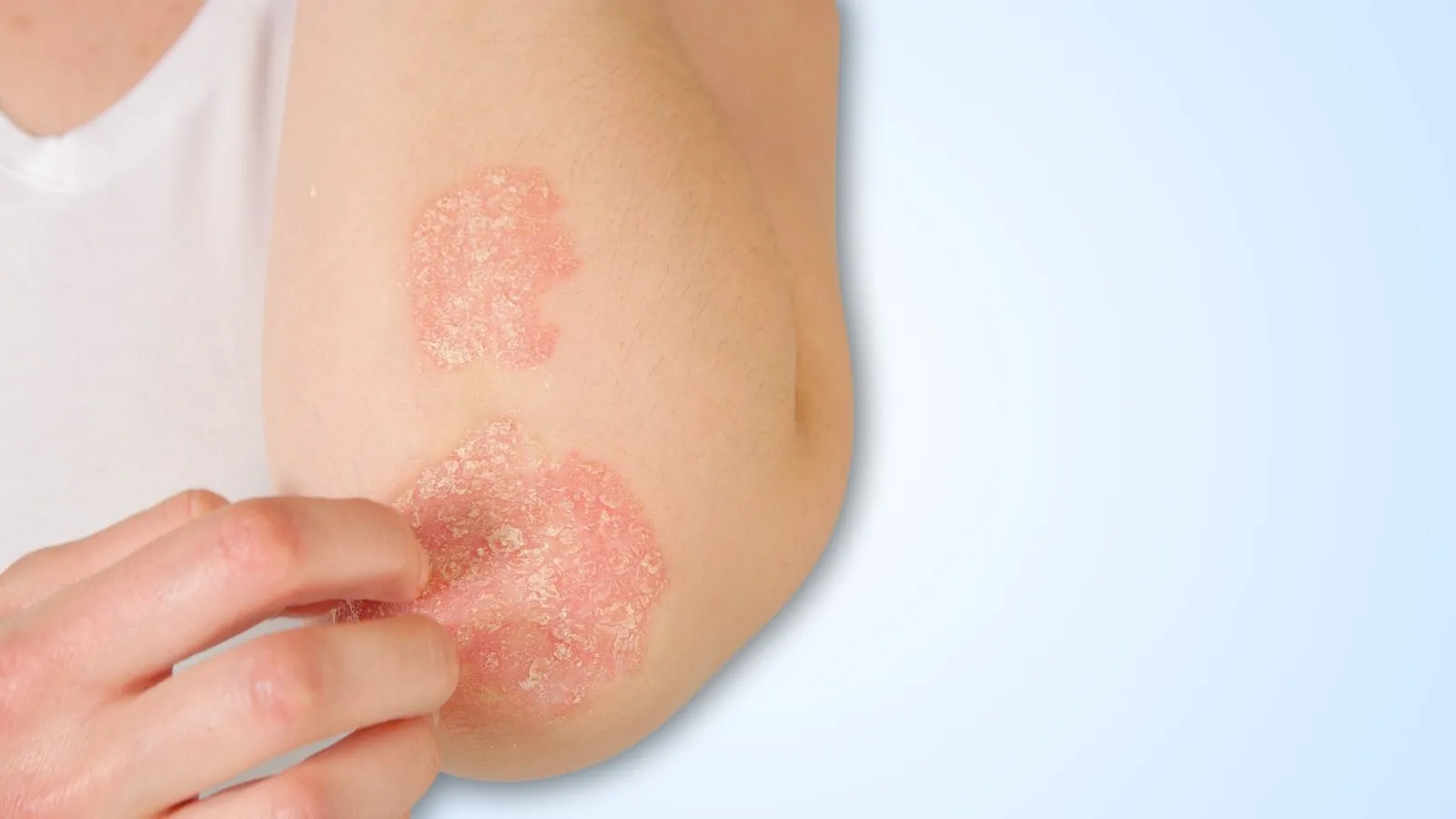
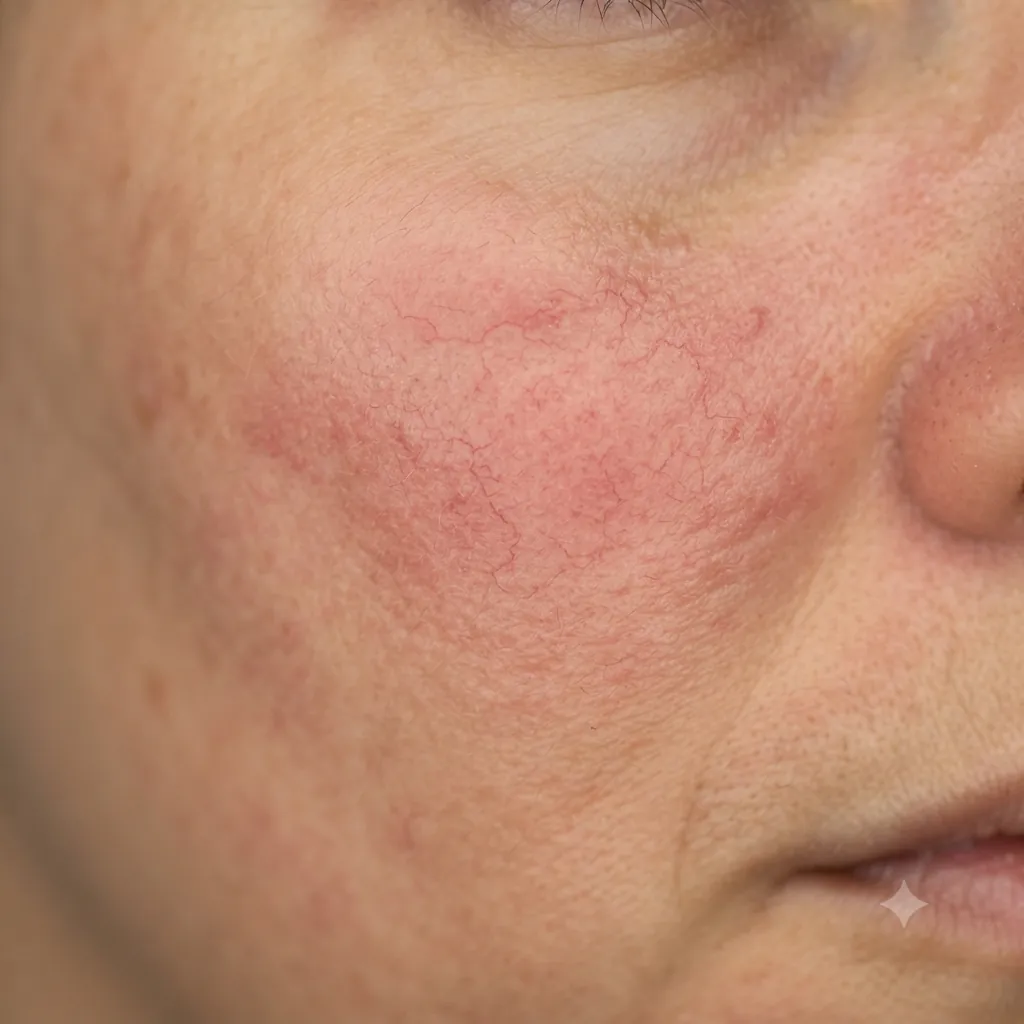
Psoriasis is thick, scaly patches with a sharp edge. It sits on elbows, knees, scalp and lower back, and you can feel where the patch stops. Rosacea is flushing and lasting redness on the middle of the face. The skin stays smooth, and the redness comes and goes long before it becomes permanent.
What it is
The immune system speeds up skin cell production. Cells pile up before the old ones shed, and the patch thickens into a plaque. It runs in families.
Vessels in the central face widen too easily and stay widened. Inflammation follows, and in some people that adds bumps and pustules.
What it looks like
Thick plaques with dry white or silvery flakes on top. On brown and black skin they often look purple, grey or dark brown rather than red.
Flushing over the cheeks, nose, chin and forehead, with fine visible blood vessels in it. Bumps and pustules appear in some people, with no blackheads among them.
The edge of the patch
Run a finger across and there is a clear step up onto thickened skin, with normal skin right beside it.
The redness fades into normal skin. There is nothing raised to feel.
Where it shows up
Also the belly button, the buttock crease and the nails. Psoriasis can appear on the face, but it is rarely only on the face.
Cheeks, nose, chin and the centre of the forehead. It spares the skin around the eyes and the sides of the face.
Does it itch or sting
Plaques itch, and they sometimes split over joints. Cracks are sore and slow to heal.
Skincare products sting on contact, the face feels hot during a flush, and eyes can feel gritty and dry.
What sets it off
Strep throat, some medicines, and cold dry weather. A cut or a scratch can grow a new plaque in exactly that spot.
Also hot drinks, exercise, cold wind and stress. Most people can name their own triggers within a few weeks.
What to check elsewhere
Small pits in the nails, a brown-yellow patch under the nail, or a nail lifting from its bed. Morning stiffness in the fingers matters too, because psoriasis can involve the joints.
Gritty, watery or sore eyes come with rosacea often enough to have their own name. Nails stay normal.
How it is treated
A combination of calcipotriol and betamethasone works better than either alone. Widespread or stubborn psoriasis has light therapy, tablets and injections.
Sunscreen and gentle cleansing come first. Metronidazole, azelaic acid or ivermectin cream treat the bumps, and laser or intense pulsed light treats fixed redness and visible vessels.
When it needs a doctor
Joint stiffness alongside scaly patches is worth naming at the appointment, because treating it early protects the joints. Painful or widespread plaques need prescription treatment.
Redness that keeps getting worse, gritty sore eyes, or skin on the nose that is starting to thicken all deserve an appointment.
Why they get mixed up
Both can put red, flaky patches on a face: Facial psoriasis is real, and it likes the hairline, the eyebrows and the folds beside the nose. From a few feet away that is a red, scaly face, which is also what rosacea can look like.
Touch sorts most of it out: A psoriasis plaque is raised, with a border you can feel and dry scale sitting on top. Rosacea is flat and smooth, and the redness sits under an intact surface.
The rest of the body sorts out the rest: Psoriasis almost never stays on the face alone. Check the elbows, knees, scalp edge, lower back and nails. Rosacea leaves nothing to find there.
What each treatment does, and does not do
Psoriasis creams flatten the plaque while you use them: Steroid and vitamin D creams thin the scale and settle the patch. Psoriasis is long-term, so patches usually return after treatment stops.
Rosacea creams reduce the bumps while you use them: Metronidazole, azelaic acid and ivermectin lower inflammation. They do very little for the fixed background redness, which is what laser and light treatment are for.
Using the wrong one makes the skin worse: A strong steroid on a rosacea cheek settles it briefly and then causes a rebound flare with more bumps. Rosacea creams do nothing to a thick plaque.
Neither one is contagious
Psoriasis is inherited and set off by things like infection, injury and stress: It has nothing to do with hygiene, and you cannot catch it or pass it on by touch.
Rosacea is not an infection either: It is not adult acne, it is not caused by dirt, and washing harder makes it worse rather than better.
Nothing stops you having both
They are two common conditions with different causes: Having one does not protect you from the other, and a red face can be doing two things at once.
Say so if half the problem is left behind: If a rosacea cream calms your cheeks and a scaly patch at your hairline stays exactly as it was, that is worth mentioning rather than waiting out.