Sculptra vs Microneedling
Sculptra is an injection that rebuilds volume. It is for a face that has gone hollow or flat, and it works under the skin over several months. Microneedling is a resurfacing procedure. It is for the texture of the skin itself: acne scars, roughness and open pores. These two are not competing treatments, and the decision is really about which problem you have.
What is done to you
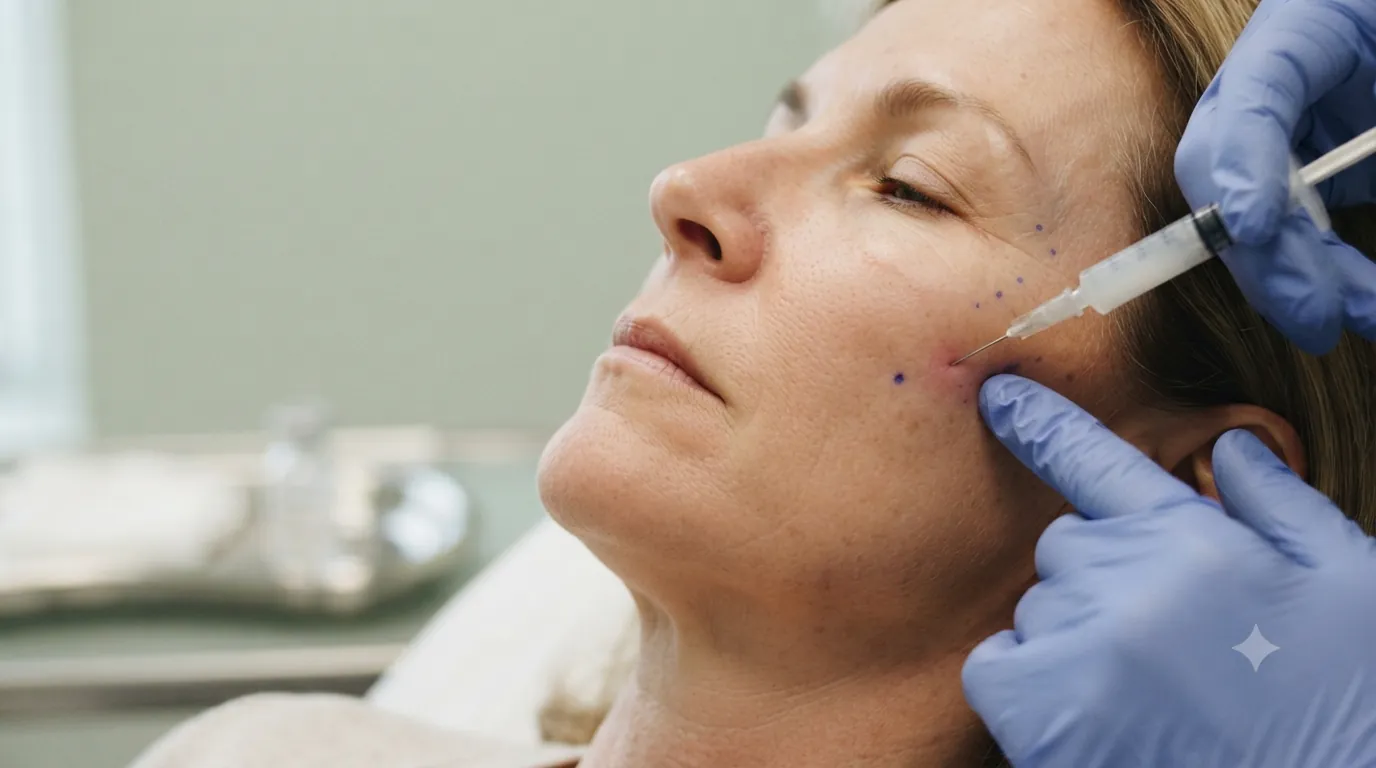
A fine spread of poly-L-lactic acid, the same material used in dissolvable stitches, is placed in the deeper layers and then massaged in.
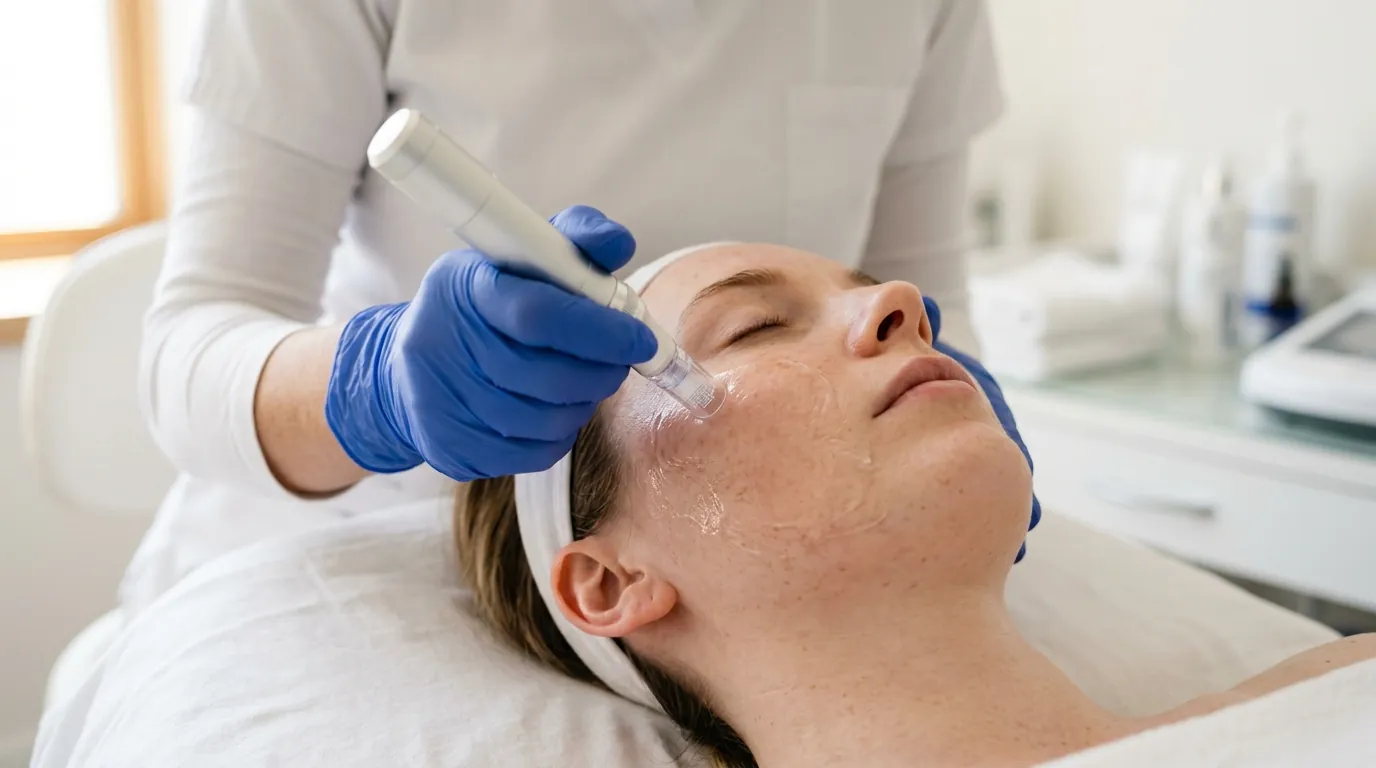
Steel needles 0.5 to 2.5 mm long puncture past the epidermis into the dermis, the layer where collagen is made.
What problem it is for
Hollow cheeks and temples, a flat or drawn look, skin that has thinned overall. It is about shape.
Acne scars, uneven texture and open pores. It is about the skin itself, not the shape underneath.
What it will not do
A fuller cheek can make fine lines look softer. It does not change a scar or a rough patch.
Needling adds no bulk. A hollow cheek stays hollow, however smooth the skin over it becomes.
How long until it works
Nothing shows on the day beyond swelling. The build is slow and deliberate.
A course is three to six sessions, about a month apart, and collagen keeps building for months after.
How long it lasts
How many visits
Spaced about a month apart. It is a course, not one appointment.
Also about a month apart, and also a course.
Downtime
You may look slightly puffy at first. That settles, and then you look unchanged for a while.
Redness for one to three days, then light flaking.
The main risk
Uncommon, and largely preventable. It is why the product is spread widely and why massage afterwards is part of the instructions. Sculptra cannot be dissolved.
Pushed too hard, treated skin can darken afterwards. That usually fades, but it can take months.
Skin tone
Nothing is aimed at pigment, so skin tone does not change the plan.
Needling has no pigment target either, which is why it is often the first choice for deeper skin tones.
Cost
Ask what the whole plan costs, and how many vials it assumes.
Ask for the price of the whole course.
The at-home or drugstore version
Nothing you can buy puts material under your skin. Creams sit on the surface and cannot reach the layer where volume is lost.
Home rollers use short, blunt needles that dull quickly and are hard to keep clean. They pierce enough to inflame skin, not enough to remodel it. A reused roller is the most common way people pick up an infection from needling.
Who each suits

These are not two versions of the same thing
They work at different depths and on different problems: Sculptra is placed beneath the skin to rebuild the padding that has thinned. Microneedling works inside the skin to smooth its surface.
Volume loss and surface texture look different in the mirror: Volume loss shows as shadows: hollow temples, a flat cheek, a face that looks tired in overhead light. Texture shows up close: indents, roughness, pores.
A useful test is lighting: Pull the skin of your cheek gently up and out with two fingers. If the shadow you dislike disappears, that is a volume problem. If the indents are still there, that is a texture problem.
Both build collagen, but not the same way
Sculptra is a biostimulator: The injected material acts as a slow trigger. Your body responds over months by laying down collagen where the product was placed. That is why nothing shows on the day, and why looking unchanged a week later is what is supposed to happen.
Microneedling is a wound-healing treatment: Thousands of tiny punctures set off a repair response, and that repair lays down collagen in the upper dermis. That is why the redness is not a side effect. It is the mechanism.
One rebuilds bulk, the other rebuilds surface: Both use the word collagen, which is where most of the confusion comes from.
Having both is common
Many people do both, at different times: A course of Sculptra restores the shape, and a course of needling improves the skin over it. They are not done in the same visit, because clinics leave time for the injected product to settle first.
What neither one does
Neither one tightens loose skin: If sagging along the jawline is the main issue, energy devices or surgery are the honest answer.
Neither one treats colour: Brown spots, flushing and broken vessels need a light-based treatment.
Before you book
Decide first whether your complaint is a shadow or an indent. That is the whole decision.
Ask what the full course costs, in both cases. Neither is a single appointment.
With Sculptra, ask what happens if you do not like the result. The honest answer is that you wait, and you want to hear it said out loud.
With needling, ask how many sessions the plan involves and what settings they use for your skin tone.
Bring a photo of yourself from a few years ago rather than a photo of someone else.