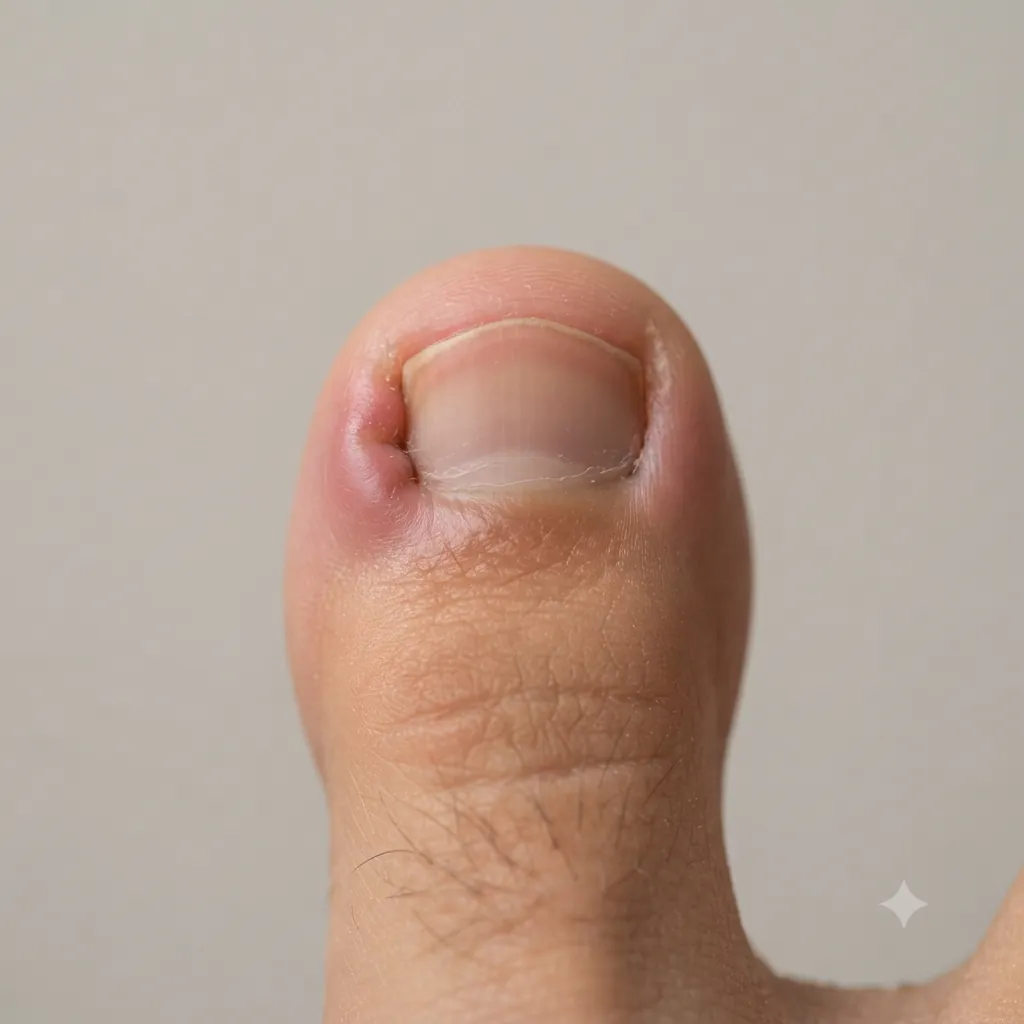
Toe Nail Trauma vs Fungus
Nail trauma is damage from an injury or from shoes pressing on the nail. The mark is dark red, purple or black, it started near an event you can remember, and it travels toward the tip as the nail grows. Toenail fungus is an infection living inside the nail. It is yellow-brown or chalky white, the nail thickens and crumbles, and the colour creeps backward toward the base. A mark that moves forward is trauma. A colour that spreads backward is fungus.
What it is
Something crushed or repeatedly rubbed the nail. Small vessels in the nail bed bleed, and the trapped blood shows through the nail plate as a dark patch.
Fungus gets under the nail, usually from the free edge, and lives on the keratin the nail is made of. The nail is being slowly eaten from within.
What it looks like
A defined mark with a visible border, and normal nail around it. The colour fades from red toward brown and black over a few weeks.
Widespread discolouration rather than one patch. The nail thickens, lifts away from the nail bed, and the edge crumbles when you cut it.
How it started
A dropped object, a stubbed toe, or months in shoes that let the toe hit the front on every downhill step.
Nobody can date it. It usually begins as a small pale or yellow wedge at one corner of the nail.
Does it hurt
A fresh bruise under the nail throbs for a day or two, because blood is trapped in a space that cannot expand. Then it settles.
Most people notice the colour and thickness long before they feel anything. A very thick nail can start to ache inside a shoe.
How many nails
The toe that took the hit. Runners often get both big toes, or the second toe if it is the longest.
It spreads to neighbouring toes, and the skin between the toes is often flaky at the same time.
What it does over time
The mark moves toward the tip with the nail and is eventually cut off. A toenail grows about a millimetre a month, so the whole nail takes roughly a year to replace itself.
Fungus does not clear on its own. It creeps back along the nail toward the base and thickens as it goes.
How it is treated
Time and roomier shoes. A very painful fresh bruise can be relieved by a clinician releasing the trapped blood through a small hole in the nail.
A prescription tablet course, usually about twelve weeks, or a medicated lacquer for milder cases. The medicine kills the fungus, but the damaged nail still has to grow out.
When it needs a doctor
Worth a visit if a dark mark stays in the same place over several months, spreads into the skin at the base, or appeared with no injury at all.
Worth a visit to confirm it really is fungus, because plenty of thick, discoloured nails are not, and tablets are a three-month commitment.
The moving-mark test
A bruise under the nail travels: Mark the front edge of the dark patch with a pen, or take a photo with a ruler beside it. Check again in a month. Trauma will have moved toward the tip, because it is fixed to the nail plate and the nail is growing.
Fungus does not travel that way: It moves in the other direction, back toward the base, and it takes the nail's texture with it. The nail gets thicker and softer rather than staying smooth.
Repeated trauma can look exactly like fungus
Not all trauma is one dramatic knock: Years of running, tight toe boxes, or a toe that sits higher than its neighbours will slowly thicken and yellow a nail without any bleeding. That thickened nail looks like a fungal nail to almost everyone.
The clue is which nails are involved and what the skin is doing: Pressure damage picks the nails that take the pressure, and the skin between the toes stays normal. Fungus tends to spread to neighbouring nails and often comes with flaky, itchy skin between the toes.
Get it confirmed before a three-month tablet course
A nail clipping settles it: A clinician can send a small clipping to be examined for fungus. It costs one appointment and it answers the question.
That matters because antifungal tablets are a long course: A large share of thick, discoloured nails turn out not to be fungal at all. Treating a pressure-damaged nail with tablets does nothing except commit you to twelve weeks of medicine you did not need.
A dark mark that stays put
One dark line or patch that does not grow out is the finding to take seriously: Trauma moves. A mark that sits in the same place for months, widens, or runs up into the skin at the base of the nail is a reason to have the nail looked at.
Being unable to recall an injury is not proof of anything on its own: Plenty of people miss the moment their nail was knocked. It is the mark's behaviour over the following months that carries the information.