Wart vs Splinter
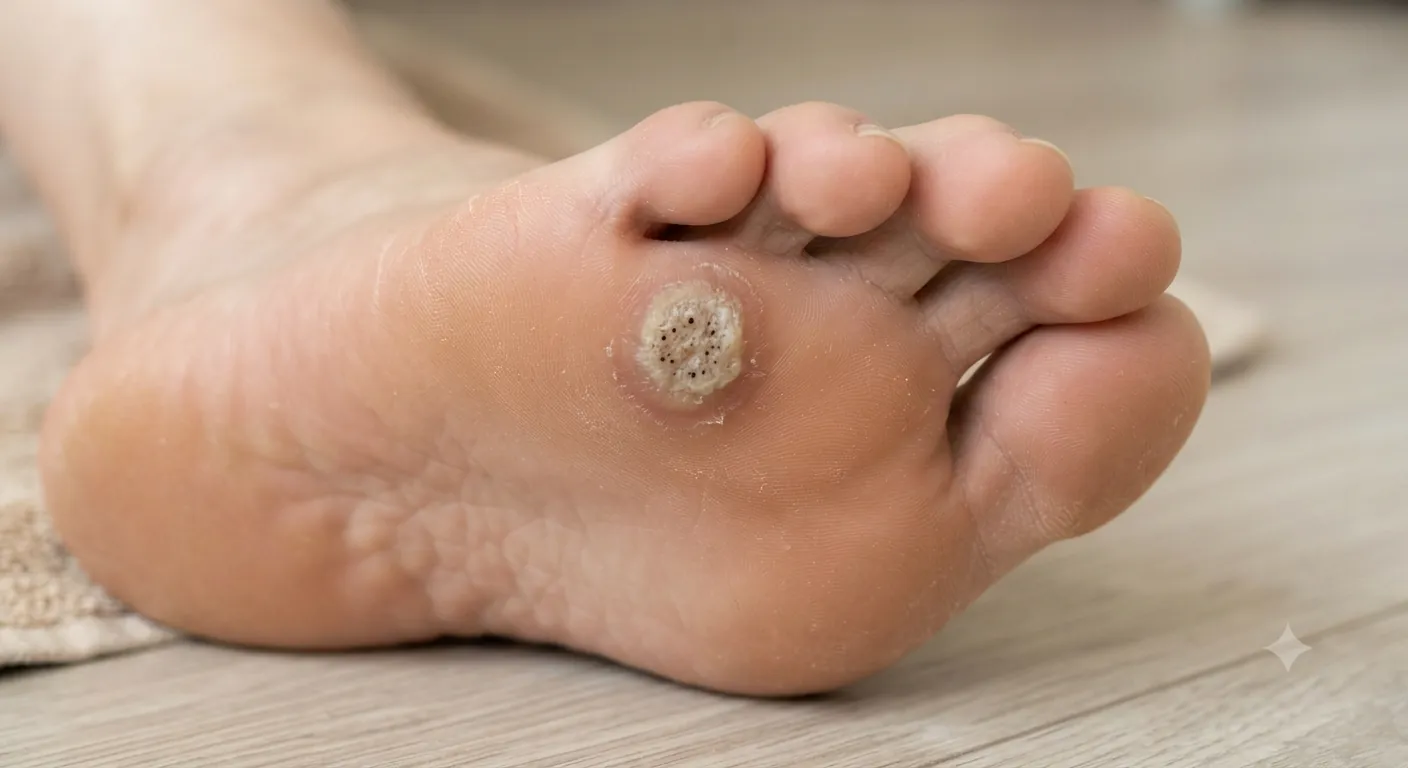
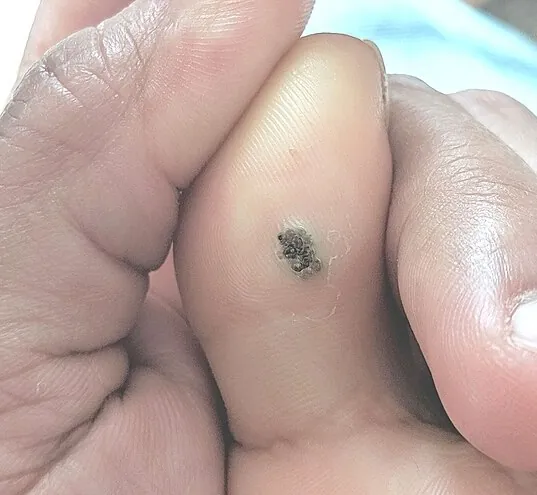
A wart is a growth made by a virus in your own skin. It builds up slowly over weeks, and the tiny dark dots inside it are what people mistake for a splinter. A splinter is a piece of wood, glass or metal stuck under the skin. It arrived in one moment, it hurt straight away, and there is a mark where it went in. When it appeared usually settles the question.
What it is
A human papillomavirus, or HPV, infects the top layer of skin. It makes those cells multiply, and the thickened bump is the result. Nothing foreign is in there.
A fragment of wood, glass, metal or thorn has pushed through the surface and stayed. The redness around it is your body reacting to an object that should not be there.
How it started
Most people cannot say when it began. It was a small rough patch, then a lump, then a bigger lump.
There is almost always a moment: a deck, a splintered handle, a broken glass, a barefoot step in the garden.
What it looks like
Dry, grainy and slightly raised, with a thickened rim. The black or dark red specks inside are small clotted blood vessels.
A straight, narrow shape rather than a round one. Often you can see one end of it, or a small dark entry point in the skin.
Does it hurt
A wart on the hand is usually painless. A wart on the sole hurts when you stand on it, and it hurts more when squeezed from the sides.
Sharp and well localised. Pressing directly over it reproduces the pain exactly, and it does not settle while the object is still there.
Where it shows up
Backs of the hands, around the nails, knees, and the weight-bearing parts of the foot.
Wherever skin meets a rough surface. Fingertips from handling wood, soles from walking barefoot, knees from kneeling.
What it does over time
It grows for weeks to months and can spread to nearby skin. The immune system clears it eventually, often after a year or more.
A shallow splinter often works its way to the surface within days. A deep one can stay, and the skin may seal over and form a firm lump around it.
What to do about it
Soak, file the surface gently, apply salicylic acid, cover, repeat daily for weeks. Freezing in a clinic is the usual next step.
Clean tweezers and a good light for anything you can see and grip. Pull along the same angle it went in. Then wash the area and cover it.
When it needs a doctor
Worth a visit if it bleeds without being knocked, changes shape, keeps spreading, or has not budged after several weeks of treatment.
Worth a visit if you cannot see or reach it, if it is glass or metal, or if the skin around it becomes red, warm and increasingly sore.
The black dots are not splinters
This is the mix-up that sends most people to this page: A wart on a finger or a sole often has small black or dark red specks in the surface. They look exactly like a fragment of dirt or wood sitting under the skin.
They are blood vessels, not debris: A wart grows its own tiny vessels, and the ones near the surface clot and darken. Digging at them with a needle does not remove anything. It breaks the skin and can move the virus to nearby skin.
What tells them apart on a foot
Look at the fine skin lines on the sole, the ones that make your footprint.
The lines stop at the edge and travel around the lump: That is a wart. The virus disrupts the normal pattern.
The lines run straight over it and something dark sits underneath: That points to a splinter or a callus.
It hurts more when you squeeze it side to side: That leans towards a wart.
It hurts more when you press straight down on one point: That leans towards a splinter.
Timing beats all of these: A lump that appeared over six weeks is not a splinter, whatever it looks like.
Getting a splinter out
Most splinters can be taken out at home: Wash your hands, clean the skin, and use tweezers under a bright light. Grip the end and pull along the line it entered. Yanking sideways snaps it and leaves the deep half behind.
A splinter you cannot see is a different job: Glass, metal and deep wood fragments often need a clinician, who can numb the skin and open it slightly. Wood left in the skin is the type most likely to become inflamed, because it holds moisture and bacteria.