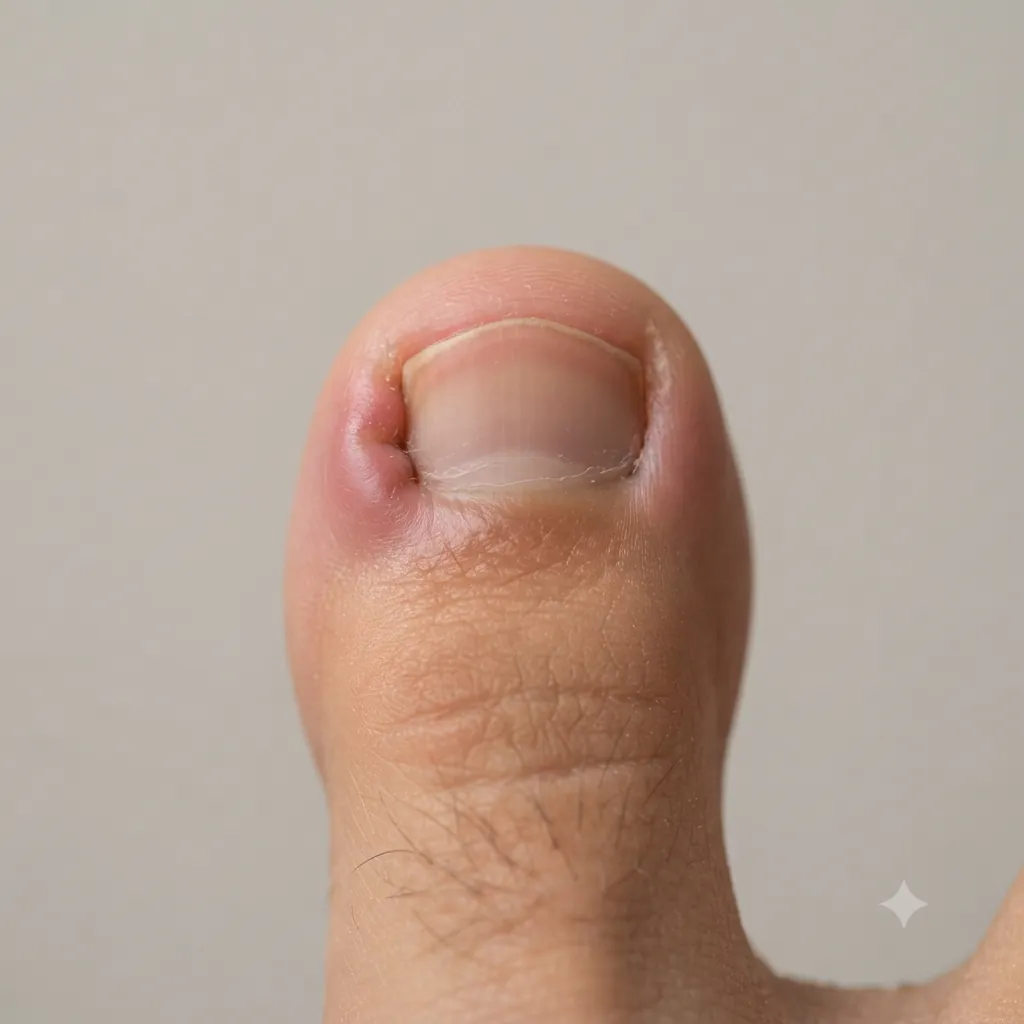
Ingrown Toenail vs Infected Toe
An ingrown toenail is a mechanical problem. The corner of the nail presses into the skin beside it, and that one spot goes red, firm and sore. An infected toe is what happens when bacteria get into that broken skin. Now there is pus, the swelling spreads past the nail fold, and the pain jumps within a day. Most infected toes started as ingrown nails, so the two often sit in the same toe at once.
What it is
The corner of the nail is angled down into the soft fold beside it. The skin reacts the way it would to a splinter. Nothing is infected yet.
Once the nail edge cuts the fold, ordinary skin bacteria get underneath. The body walls them off, and pus collects in that pocket.
What it looks like
The nail looks normal. The skin at one corner is swollen and slightly shiny, and there may be a bead of clear or yellow fluid.
The fold looks tight and glossy, a yellow or white pocket often shows through, and the redness reaches beyond the nail fold onto the toe.
Does it hurt
Tender when the corner is pressed, and uncomfortable in a tight shoe. Bearable when the foot is bare and up.
Beats even when nothing is touching it, and a bedsheet can be too much. The lightest pressure over the pus pocket is very tender.
How fast it changes
It builds slowly, and there is usually a week of warning before it becomes a real problem.
The jump is noticeable. Yesterday it was sore, today the toe is fat and hot.
Do you feel unwell
It is a local problem. You should not have a fever from an ingrown nail on its own.
A spreading toe infection can come with feeling generally run down, or with red streaking up the foot.
What it does over time
It will not settle while the nail is still buried. Left alone, the skin piles up over the edge and can start to weep.
Once a pocket has formed, soaking alone rarely finishes it. It settles quickly once the pus is drained.
How it is treated
Warm salt-water soaks for ten to fifteen minutes a few times a day, open or roomy shoes, and a clinician lifting or trimming the corner if it does not settle.
A clinician numbs the toe and releases the pus, which relieves it immediately. Antibiotics are added when the redness is spreading. The nail edge still has to be dealt with.
When it needs a doctor
Worth a visit if soaking and roomy shoes have not helped, or if the same toe goes ingrown over and over.
Pus, spreading redness, heat, or lumpy pink tissue growing over the nail edge all mean the toe needs looking at rather than waiting out.
One turns into the other
The nail edge is the injury and the infection is the sequel: A buried nail corner keeps a small wound open in the skin fold. Bacteria live on everyone's skin, and an open wound inside a warm shoe is an easy place for them to settle.
That is why the two problems overlap so often: By the time most people book an appointment, the toe has both: a nail edge that is still digging in, and an infection sitting on top of it.
What has changed when a toe becomes infected
The list below is a change of state, not a checklist to score.
Pus or cloudy fluid at the nail edge
Redness that has moved past the fold onto the toe
Warmth you can feel with the back of your hand
Pain that throbs when nothing is touching it
Swelling out of proportion to how the nail looks
Soft, lumpy pink tissue growing up over the nail edge
Any one of those changes the plan: An uninfected ingrown nail is a soaking-and-shoes problem. An infected one is an appointment.
Treating only the infection means it comes back
Antibiotics work on the bacteria, not on the nail: A course helps for a week or two, the swelling drops, and the toe feels better. Then the same buried nail edge cuts the same skin again.
Removing the offending strip of nail is what ends the cycle: A clinician numbs the toe and takes out a narrow strip along the edge. It takes a few minutes, relieves the pain the same day, and the nail regrows narrower.
Keeping the toe out of trouble
Cut straight across, level with the tip of the toe: Rounding the corners is what starts most ingrown nails. It leaves a spike of nail that the skin then grows over.
Give the toe room while it heals: Open shoes for a week do more than any cream, because the whole problem is pressure. Warm salt-water soaks soften the fold enough for the nail edge to lift clear.
If you have diabetes, neuropathy or poor circulation, do not treat a toe at home: Reduced feeling means a small injury goes unnoticed, and reduced blood flow means it heals badly.